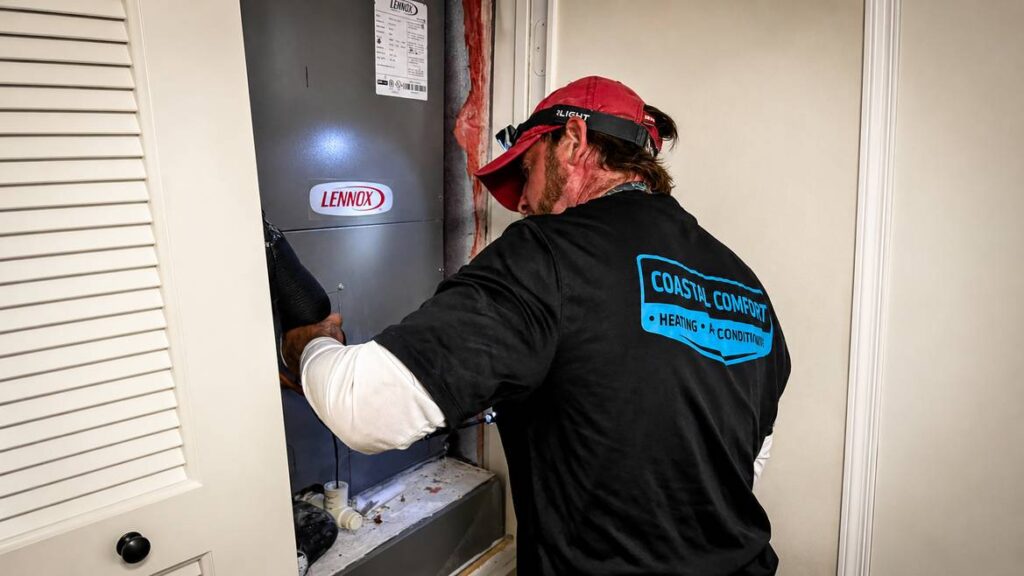
If you live anywhere along the Texas Gulf Coast, you already know your air conditioner works harder than the average system. Salt air, sticky humidity, long cooling seasons, and the occasional hurricane all take a toll on residential HVAC equipment, and that brings a lot of homeowners to the same question: how often should I service my air conditioner to keep it running reliably?
The short answer is twice a year. The longer answer, especially for homes within a mile or two of the bay or the seawall, comes with a few coastal twists worth understanding before your next utility bill, or your next breakdown.
At Coastal Comfort, we have spent decades servicing HVAC systems across Galveston Island, Tiki Island, Bolivar Peninsula, Texas City, and League City. This guide pulls together what we have learned about how often to service your AC in our climate, what those visits should include, what warning signs deserve an immediate call, and how preventive care compares to reactive repairs over the long run.
The Short Answer: Twice a Year for Coastal Texas Homes
Most HVAC manufacturers and the U.S. Department of Energy recommend at least one professional tune-up per year for residential air conditioners. That is a solid baseline for inland homes in mild climates. In Galveston, we recommend two professional visits per year, plus a handful of small homeowner tasks in between.
Here is the schedule we recommend for almost every home on the island:
- Spring visit (March or early April): Get the cooling system ready for the long, hot, humid season ahead. Catching a weak capacitor or low refrigerant in March is a routine fix. Catching it in July, after the unit has already failed, becomes an emergency call.
- Fall visit (October or early November): Check the heating side of the system, flush salt residue off the outdoor coil, inspect for any storm damage from hurricane season, and prepare for the few cold snaps that do roll through.
That bi-annual rhythm is the standard recommendation across every coastal Texas HVAC provider we know, and it lines up with what every major equipment manufacturer requires to keep warranty coverage active.
Why Coastal Galveston Homes Need More Attention Than Most
The reason we double the standard service frequency comes down to one word: salt. Galveston’s combination of salt aerosol, year-round humidity (averaging 70 to 85 percent), and intense summer heat does measurable damage to AC components that homeowners 50 miles inland simply do not deal with.
A few facts worth knowing about your equipment:
- Salt air corrodes condenser coils, electrical connections, and cabinet hardware roughly 3 to 5 times faster than equipment installed inland.
- Average coastal AC lifespan runs 7 to 10 years, compared to 15 to 20 years for inland units, and that gap widens fast for systems that never get serviced.
- Galveston’s wet-dry cycle concentrates salt deposits on fins and electrical terminals, then traps moisture underneath, creating localized corrosive hotspots that accelerate pitting.
- The cooling season here runs 8 to 10 months, not the 6 to 8 months you would see in most of the country, which means runtime hours stack up much faster.
The good news: consistent bi-annual maintenance plus a few targeted homeowner habits can nearly double the lifespan of a coastal HVAC system, pushing it back toward that 12 to 15 year mark. That is exactly why local plans like our Comfort Club Annual Service Plans are structured around two scheduled visits, not one.
What a Professional AC Service Visit Should Include
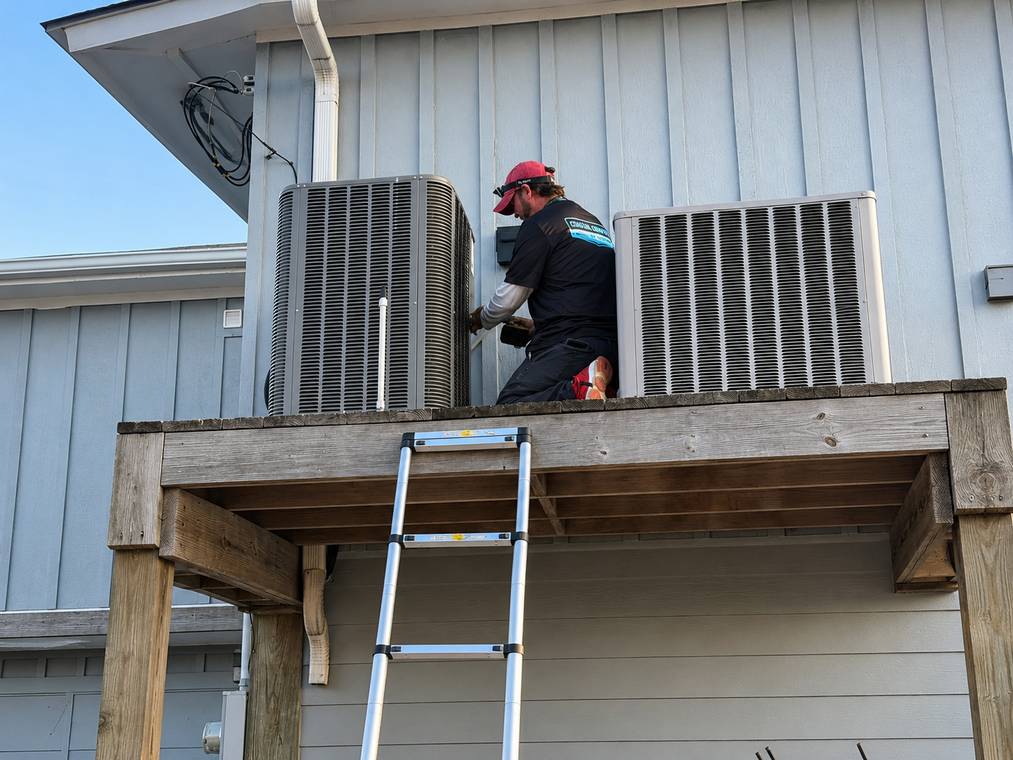
A real tune-up is not a 15 minute look-and-leave. When our technicians arrive for a maintenance visit, here is the checklist we work through. If you are using another contractor, this is what you should expect them to cover.
Spring (Cooling Season) Service
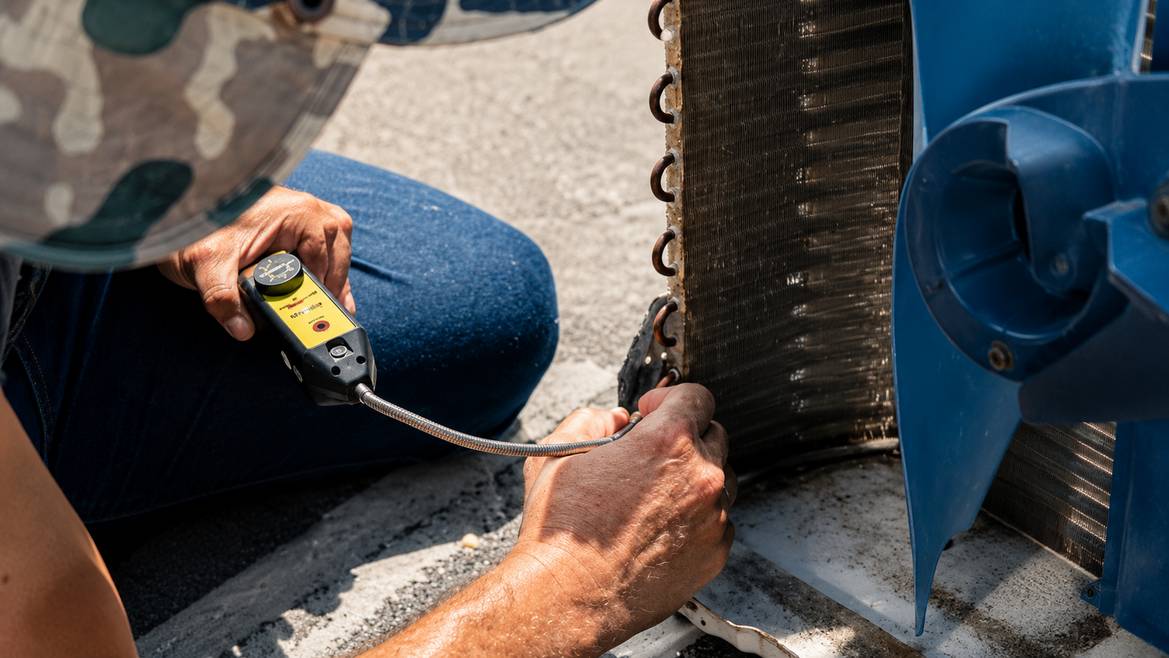
- Refrigerant level check and leak inspection. Low refrigerant is the most common cause of “AC blowing warm air” calls, and in Galveston heat it cascades into compressor failure quickly.
- Condenser coil cleaning with anti-corrosion coil treatment, including a fresh-water rinse to remove built-up salt residue.
- Evaporator coil inspection for mold growth and ice accumulation. Humid coastal air gives mold an easy foothold here.
- Electrical connections tightened and inspected for corrosion. Loose or pitted terminals are a leading cause of capacitor and contactor failures.
- Capacitor testing with a meter. Capacitors are cheap to replace on a maintenance visit. They are expensive when they fail mid-July.
- Blower motor inspection and lubrication where applicable. Verify amp draw is within spec.
- Condensate drain line flush with a vinegar or biocide solution to prevent algae blockages that flood ceilings and pans.
- Thermostat calibration and battery check. Smart thermostats get a firmware and schedule review.
- Filter replacement with the correct MERV rating for your system.
- System performance test measuring temperature drop across the coil, static pressure, and amp draw.
Fall (Heating Season) Service
- Heat exchanger inspection for cracks. This is a safety-critical step on gas furnaces.
- Furnace ignition system check, including flame sensor cleaning.
- Ductwork inspection for salt-induced pinhole leaks, especially in attics where rooftop sun cycling speeds up metal fatigue.
- System startup test running a full heating cycle to confirm proper response.
- Hurricane post-season check of the outdoor unit, disconnect, and electrical feed for any storm-related damage.
What You Can Do Between Professional Visits
Homeowners can extend the life of a coastal HVAC system significantly with a few habits that take less than 10 minutes a month. None of these replace professional service, but they make every professional visit go more smoothly and catch small issues before they grow.
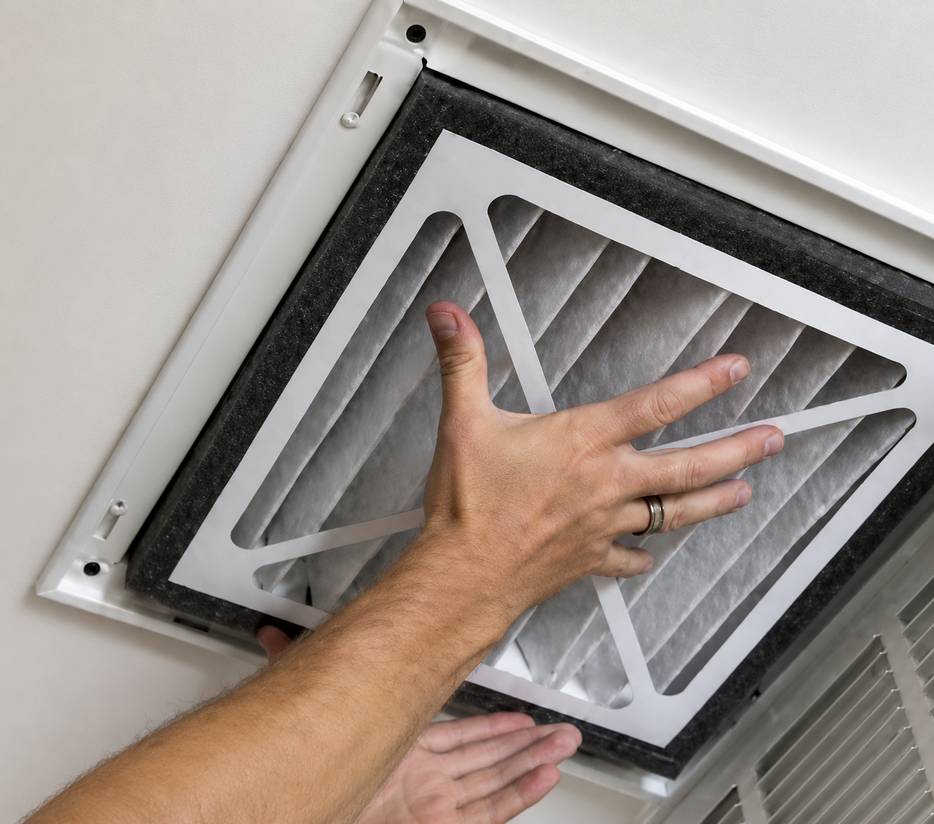
- Replace your air filter every 30 to 60 days during peak summer. Standard 90 day filter intervals do not hold up well to coastal salt, dust, and pollen.
- Rinse the outdoor condenser with a garden hose every 2 to 4 weeks during heavy salt buildup periods. Use gentle fresh water from top to bottom, with the power off at the disconnect. This single habit slows corrosion more than any other DIY step.
- Keep a 2 to 3 foot clearance around the outdoor unit. Trim back vines, shrubs, and tall grass that block airflow or trap moisture against the cabinet.
- Flush the condensate drain line monthly with a cup of distilled white vinegar. Galveston humidity grows algae in those pipes faster than almost anywhere else in Texas.
- Listen and watch. A new rattle, hum, or short cycle is your system telling you something is wrong. Catching it the same week saves significant money later.
10 Warning Signs Your AC Needs Service Right Now
Even with a perfect bi-annual schedule, problems can develop between visits. If you notice any of these signs, do not wait for your next scheduled tune-up. Catching a small issue early typically reduces the repair cost by 30 to 50 percent compared to letting it cascade.
- Warm or lukewarm air from the vents. Usually a refrigerant leak, compressor problem, or thermostat fault.
- Weak airflow. A clogged filter, failing blower motor, or duct blockage. Salt air speeds up filter contamination and duct corrosion.
- Unusual noises. Banging or grinding points to loose internal parts. Squealing suggests belt or motor wear. Rattling can mean storm-loosened cabinet panels.
- Foul or musty odors. Mold growing on the evaporator coil or in the ductwork. Common in our humidity and a real air quality concern.
- Burning smells. Stop the system immediately. This usually indicates an electrical issue or motor failure.
- Sudden spike in your electric bill without a change in use. Dirty coils, low refrigerant, or restricted airflow are forcing the system to work overtime.
- Short cycling. The unit kicks on and off every few minutes. Causes rapid wear, big bills, and eventual compressor failure.
- Uneven cooling room to room. Often duct leaks, low refrigerant, or zoning issues. In coastal homes, salt-driven pinhole leaks in ducts are a frequent culprit.
- Water around the indoor unit or visible condensation on vents. A clogged condensate drain or frozen coil. Humidity makes both worse here.
- Indoor humidity that stays high even when the AC is running. Your system is failing at one of its core jobs, and indoor air quality will suffer.
A few situations are true emergencies: no cold air during a heat advisory, active water leaking through ceilings, visible smoke, or a burning electrical smell. For those, our Emergency HVAC Services team is on call.
Preventive Maintenance vs. Reactive Repair: The Real Numbers
Here is the part that surprises most homeowners. A consistent maintenance plan is not just a nicety, it is meaningfully cheaper than running the unit until it breaks.
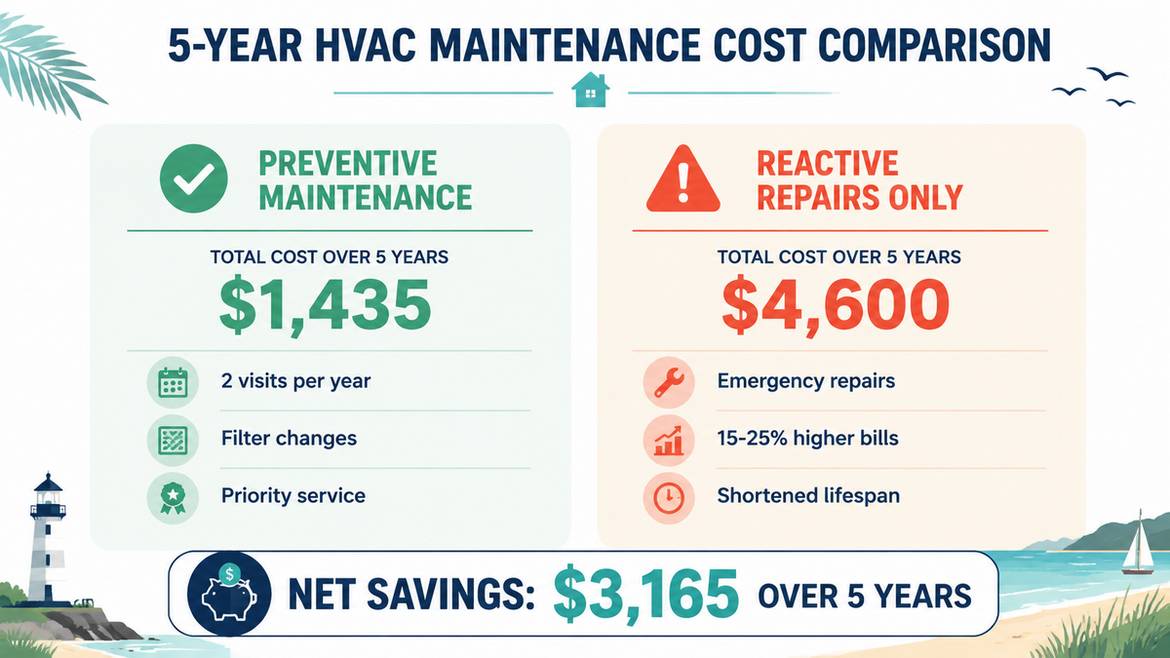
A few benchmark numbers to keep in mind:
- Annual preventive maintenance: $200 to $500 per year, typically including two visits and filter changes.
- Single emergency repair call: $250 to $1,500 on average, with after-hours rates running 1.5 to 2 times standard.
- Compressor failure: $1,200 to $2,800 in parts and labor.
- Full system replacement: $5,000 to $12,000.
- Energy waste from a neglected system: 15 to 30 percent higher cooling bills, year after year.
Over a 5 year window, homeowners on a preventive plan typically spend around $1,400 to $1,500 in total HVAC costs. Homeowners on a reactive (call-when-it-breaks) approach spend more like $4,500 to $6,000 once you factor in emergency calls and wasted electricity. The U.S. Department of Energy puts the savings at roughly 50 percent in total maintenance costs for homes on a planned program.
There is one more catch that does not always get mentioned: most manufacturer warranties require documented annual maintenance. If your 8 year old compressor fails and you cannot produce service records, the warranty claim can be denied. A maintenance plan automatically keeps that paper trail.
Building a Galveston-Friendly Annual Schedule
If you want a simple calendar to follow, here is the rhythm we recommend for most Galveston homes:
- March: Spring professional tune-up. Replace filter. Confirm thermostat schedule.
- April through August: Replace filter every 30 to 45 days. Rinse outdoor unit every 2 to 4 weeks. Flush condensate drain monthly.
- July or August: Optional mid-summer check for homes on the water or for units more than 8 years old. Catches small issues before they turn into August emergencies.
- September: Post-hurricane-peak visual inspection. Look for storm damage, debris, loose disconnect boxes.
- October: Fall professional tune-up. Heating side checked, salt residue cleared, drain line inspected.
- November through February: Continue filter changes every 60 to 90 days. Keep an eye on heating cycles during cold snaps.
That schedule is exactly what our Routine Maintenance and Tune-Ups service is built around, with both visits bundled together so you do not have to remember to schedule them.
When to Service vs. When to Repair vs. When to Replace
Sometimes the question is not just how often to service an AC, but whether servicing it still makes financial sense. A useful rule of thumb is the $5,000 rule: multiply the age of your unit by the cost of the repair. If the result is over $5,000, replacement usually wins. A $400 capacitor on a 7 year old unit ($2,800) is an easy yes on repair. A $1,500 compressor on a 12 year old unit ($18,000) is a clear case for replacement.
For coastal homes, we also recommend replacement when:
- The unit is more than 10 years old and uses outdated refrigerant (R-22).
- Visible corrosion has reached structural components like the cabinet or coil headers.
- Repair costs in a 12 month window exceed 50 percent of replacement cost.
If you are weighing those tradeoffs, our team can run a side-by-side comparison through our HVAC Repair Services line so you know exactly where you stand.
Ready to Get on a Schedule?
The hottest day of the year is not the day to find out your AC needs attention. If you have not had a tune-up this season, or if you cannot remember the last one, that is the cue. Our team at Coastal Comfort has spent decades servicing HVAC systems across Galveston, Tiki Island, Texas City, and the surrounding coast, and we built our Comfort Club Annual Service Plans around exactly the schedule outlined above.
Call us, or read about the team behind the company to learn how we got here. Either way, a 60 minute service visit now beats a 100 degree afternoon waiting on emergency parts later.

Frequently Asked Questions
How often should I service my air conditioner in Galveston?
Twice a year is the right answer for almost every home on the island and immediate coast. Spring (March or April) for the cooling system, fall (October or November) for the heating side and post-hurricane inspection. Homes directly on the water or older units often benefit from a third mid-summer check.
Is it really necessary to service an AC every year?
Yes, and that is true even for newer systems. Most manufacturer warranties require documented annual maintenance, and units that go unserviced lose 15 to 30 percent of their efficiency over time. In Galveston’s climate, skipping service typically cuts 5 to 10 years off the equipment’s lifespan.
How often should I change my air filter in a Galveston home?
Every 30 to 60 days during peak cooling season (April through October), and at least every 90 days the rest of the year. Coastal salt, humidity, and pollen all push filters past their rated life sooner than they would inland.
What is the best month to service my air conditioner?
March is ideal for the spring tune-up because the system is about to face its hardest months and parts availability is at its best. October works well for the fall visit because hurricane season is winding down and heating system issues can be addressed before winter cold fronts arrive.
Can I service my own air conditioner?
Some tasks yes, others no. Filter changes, condensate drain flushes, condenser rinsing, and clearing vegetation are all fair game for homeowners. Refrigerant checks, electrical work, capacitor replacement, and any sealed-system work require an EPA-certified technician by law, and getting them wrong can damage the unit or void the warranty.
How long should my AC last in Galveston?
Without consistent maintenance, expect 7 to 10 years. With bi-annual professional service and the homeowner habits above, you can reasonably target 12 to 15 years, even on the immediate coast.
Does servicing my AC really lower my electric bill?
Yes, measurably. A clean coil, properly charged refrigerant, and tight electrical connections together typically restore 10 to 20 percent of lost efficiency. On a $250 summer electric bill, that adds up to several hundred dollars a year in savings.