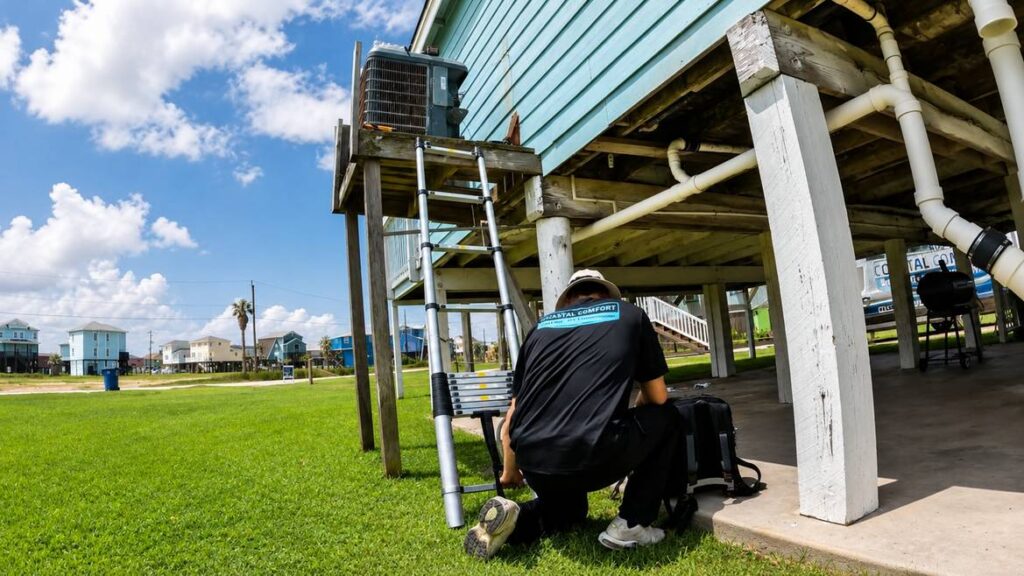
If you live on the island, you already know that Galveston is hard on just about everything outdoors, and your air conditioner is no exception. Salt-laden air, relative humidity that often sits between 70 and 80 percent, and a cooling season that runs eight to nine months a year all add up to a system that works harder and corrodes faster than one inland. The good news is that a little routine attention goes a long way.
This HVAC maintenance checklist is built specifically for the Gulf Coast. It walks you through what to do every month, what to handle each season, and what to leave to a licensed technician. Follow it and you can expect lower energy bills, fewer surprise breakdowns during a July heat wave, and an outdoor unit that lasts closer to 15 years instead of giving out at 7 or 8.
At Coastal Comfort, we have spent years keeping Galveston homes cool and comfortable, so this guide reflects the real conditions your equipment faces just a few blocks from the water.
Why Galveston Weather Demands a Tougher HVAC Maintenance Routine
Before the checklist, it helps to understand what you are protecting your system against. Galveston sits in a hot, humid climate (ASHRAE Zone 2A), and that combination of salt and moisture is rough on cooling equipment.
- Salt corrosion. Sodium chloride particles ride in on the sea breeze, settle on your outdoor condenser, and attract moisture. That salty film drives oxidation and pitting on coils, fins, fan blades, cabinets, and electrical terminals. Coastal units often last only 7 to 12 years when neglected, compared with 12 to 15 or more inland.
- High humidity. Your AC has to pull both heat and moisture out of the air, so it runs longer cycles, produces gallons of condensate a day in peak summer, and keeps indoor coils and drain pans wet. Persistent indoor humidity above 60 percent invites mold and musty odors.
- Storms and surges. Tropical systems bring wind-driven debris, sand, and power fluctuations that can damage coils and fry control boards.
The payoff for staying ahead of all this is real. Regular maintenance can cut HVAC energy use by roughly 5 to 15 percent, which often works out to 50 to 175 dollars a year for a Galveston home, on top of avoiding repairs that can run 1,500 to 3,500 dollars or a full replacement in the 7,000 to 12,000 dollar range.
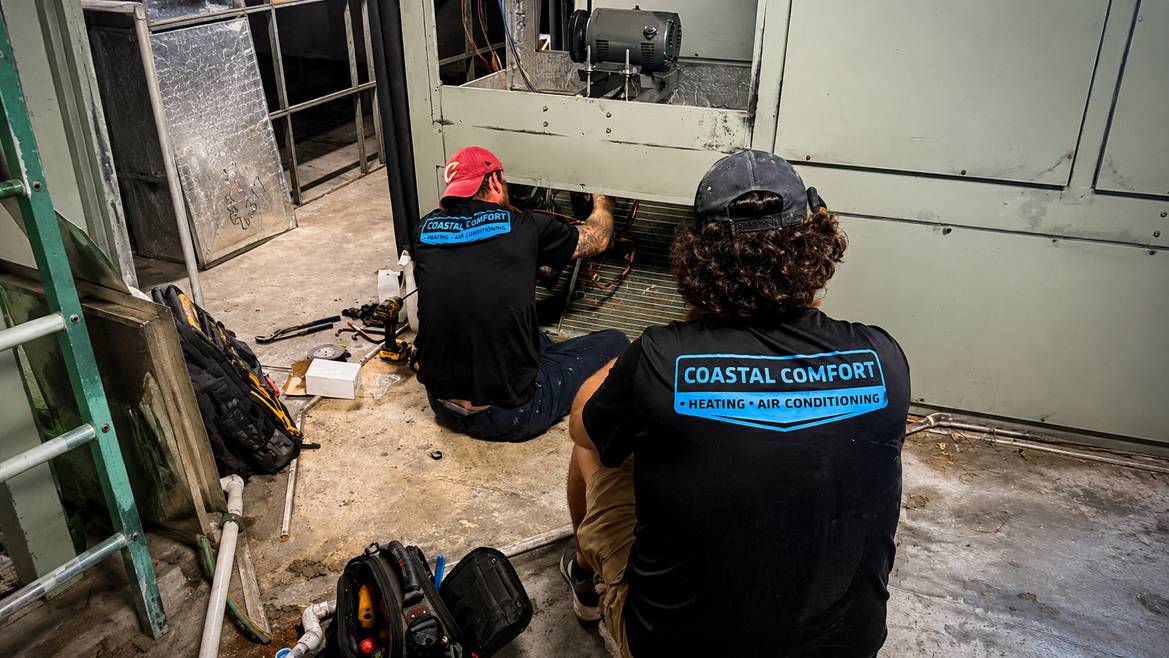
The Monthly HVAC Maintenance Checklist (Do These Year-Round)
These are the small, repeatable habits that protect your system between professional visits. None of them take long, and they make the biggest difference in our climate.
Change or Check the Air Filter
A clean filter is the single most important habit on this HVAC maintenance checklist. It keeps airflow strong, helps the system dehumidify, and reduces strain on the blower motor.
- Check the filter every 30 days during heavy cooling season, and replace it whenever it looks dark or clogged.
- In milder shoulder months you can stretch to 60 to 90 days.
- Use a pleated filter rated MERV 8 to 11, which captures dust, pollen, and fine salt without choking airflow.
- Keep a case on hand so you are never tempted to leave a dirty one in place.
Rinse the Outdoor Condenser
This step is non-negotiable on the island. Salt builds up on the condenser coils and quietly eats away at them.
- Rinse the outdoor unit every 2 to 4 weeks during cooling season, and again after any windy, foggy, or stormy stretch that blows salt around.
- Turn off power at the disconnect or breaker first.
- Use a garden hose on low pressure, spraying from the top down and the sides inward to push salt and debris back out of the fins.
- Never use a pressure washer (it bends the fins) and skip harsh cleaners, which can actually speed up corrosion. Plain fresh water is best.
Flush the Condensate Drain Line
In our humidity, algae and slime clog drain lines fast, and a backed-up line can overflow and stain ceilings.
- Once a month during heavy AC use, pour 1 cup of white vinegar into the drain line cleanout near the indoor unit.
- Confirm water drips steadily from the outdoor drain outlet while the AC runs.
- If your system has a safety float switch, lift it briefly to make sure it shuts the unit off, then reset it.
Keep Vents and the Outdoor Unit Clear
- Keep furniture, rugs, and curtains at least 12 inches away from supply and return vents, and vacuum the grilles every month or two.
- Maintain 2 to 3 feet of clearance on all sides of the outdoor unit and 4 to 5 feet above it. Trim shrubs and clear leaves, palm fronds, and storm debris.
- Never store bikes, trash cans, or lumber against the condenser, since they trap moisture and salt.
The Seasonal HVAC Maintenance Checklist
Galveston really only has two HVAC seasons, a long cooling season and a short heating one, but breaking the year into four parts keeps things simple.
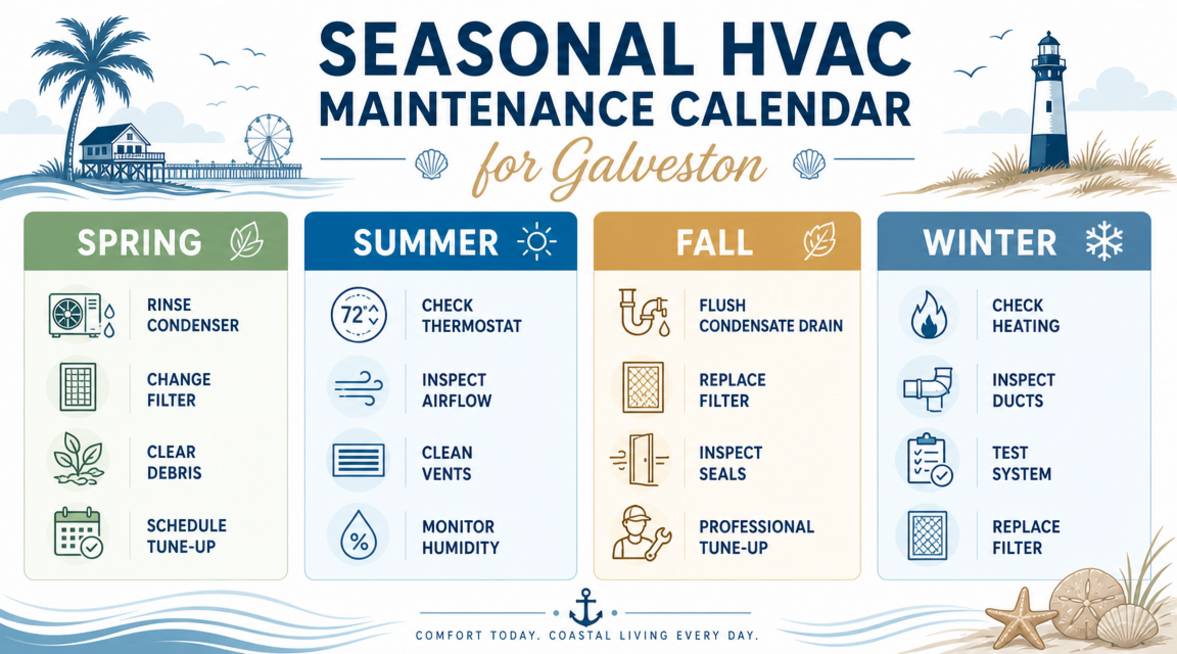
Spring (February to April): Get Ready for the Heat
This is the most important tune-up of the year. Schedule professional cooling maintenance before sustained 80 to 90 degree days arrive.
- Replace the air filter so you start the season clean.
- Clear vegetation and debris around the outdoor unit.
- Inspect accessible attic ducts and seal small gaps with mastic or UL-181 foil tape (avoid cloth duct tape, which fails in heat and humidity).
- Program your thermostat, with a cooling setpoint around 75 to 78 degrees when home.
- Run a test cycle to confirm strong airflow, cool air within a few minutes, and no odd noises or breaker trips.
Summer (May to September): Peak Heat, Humidity, and Salt
This is when your system works hardest, so stay on top of the monthly tasks.
- Inspect the filter every 30 days and rinse the condenser every 2 to 4 weeks.
- Use ceiling fans set counterclockwise so you can keep the thermostat a touch higher and stay comfortable.
- Watch indoor humidity. If it stays above 60 percent even with a working AC, talk to a pro about sizing, airflow, or adding a dehumidifier.
- Monitor the condensate drain for water around the air handler or a rusty drain pan.
Fall (October to November): Wrap Up Cooling, Prep for Heating
- Schedule a fall tune-up to check the heating side and assess any summer salt damage.
- Replace the filter after heavy summer use and clean the vents.
- Test heating mode on the first cool day (a brief hot-dust smell is normal).
- Confirm the outdoor unit is firmly anchored to its pad ahead of storm season.
Winter (December to February): Mild but Not Optional
Salt does not take a season off, even when temperatures are mild.
- Change the filter at the start of the heating season and run the system to confirm reliable startup and warm air.
- For gas furnaces, test carbon monoxide detectors and replace batteries annually. If you ever smell gas, shut the system off and call a professional immediately.
- Keep rinsing the outdoor unit every 4 to 6 weeks on milder days to clear salt buildup.
- During the rare hard freeze, make sure exposed PVC condensate drain lines are protected so they do not freeze solid.
Coastal Protection Steps That Extend System Life
A few Galveston-specific moves go beyond the basics and can add years to your equipment.
- Anti-corrosion coatings. Ask about epoxy or polymer coatings for condenser coils, fins, cabinets, and fasteners. Coatings run roughly 150 to 500 dollars and are one of the most effective long-term protections in salt air.
- Coastal-rated replacement equipment. When it is time to replace the system, request a coastal or seacoast-rated model with factory-coated coils and stainless or corrosion-resistant hardware. Mount it on a raised pad above likely standing water.
- Surge protection. A whole-house or dedicated surge protector (about 150 to 400 dollars installed) shields control boards and motors from the power fluctuations that come with Gulf Coast storms.
- Right-sizing and duct sealing. Oversized units short-cycle and remove less moisture. A properly sized, high-efficiency system with sealed ductwork dehumidifies better and can cut energy losses by up to 20 percent.
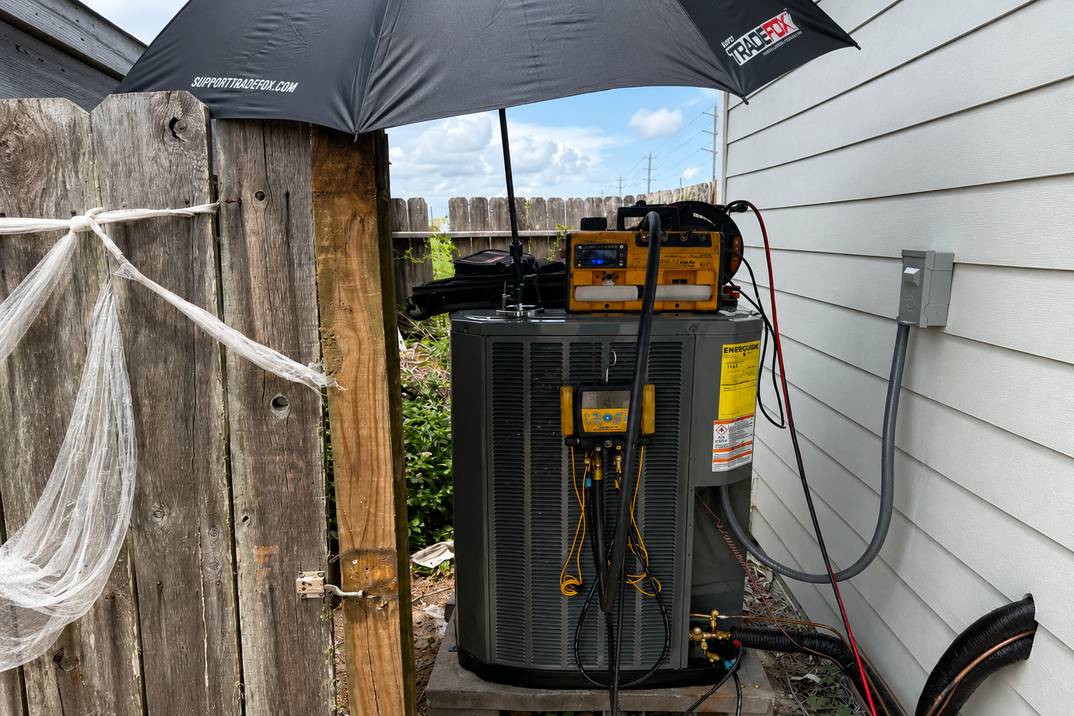
DIY Tasks vs. When to Call a Professional
Part of a smart HVAC maintenance checklist is knowing where your job ends and a technician’s begins.
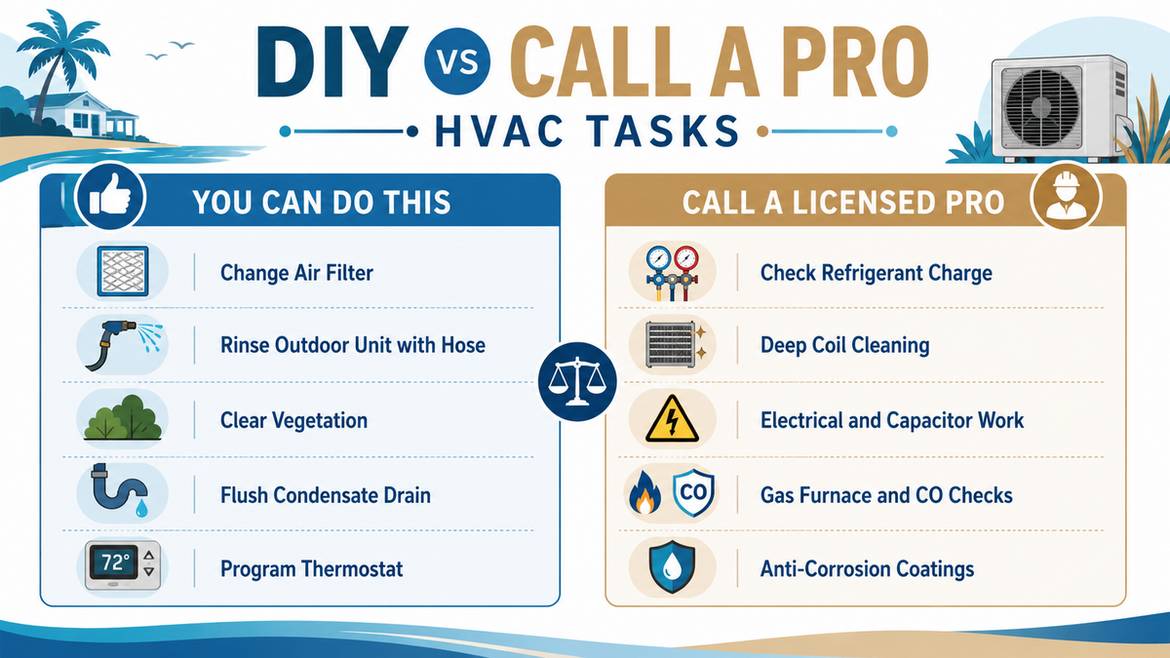
Safe for most homeowners:
- Changing air filters
- Rinsing the outdoor unit with low-pressure water (power off)
- Clearing vegetation and debris
- Flushing the condensate drain with vinegar
- Visual inspections and basic thermostat programming
Leave to a licensed HVAC professional:
- Checking and adjusting refrigerant charge
- Deep-cleaning evaporator coils inside the air handler
- Electrical diagnostics and capacitor or contactor replacement
- Gas furnace burner, flue, and carbon monoxide work
- Installing ductwork and applying coil coatings
How often should the pros come out? In a coastal climate like ours, plan on professional service twice a year, once in spring for cooling and once in fall for heating. If you live in the first few blocks off the beach or your system is 11 or more years old, quarterly visits are worth it. A two-visit annual plan typically runs 150 to 300 dollars, and the energy savings alone often cover a good chunk of that.
Keep Your Cool All Year on the Island
Galveston’s salt air and humidity will test any cooling system, but a steady HVAC maintenance checklist keeps yours efficient, reliable, and ready for the next heat wave or storm. Handle the monthly and seasonal basics yourself, and let a licensed team take care of the rest twice a year.
When you are ready for a spring tune-up, a maintenance plan, or fast repair help, the Coastal Comfort team is right here on the island. We proudly serve homeowners across Galveston Island and know exactly what Gulf Coast conditions demand from a cooling system. Contact us today and keep your home comfortable through every season.

Frequently Asked Questions
How often does an HVAC system in Galveston need professional maintenance?
In a hot, humid, salty coastal climate, professional service twice a year is the minimum, ideally once in spring and once in fall. Homes within the first few blocks of the beach or with systems 11 or more years old benefit from quarterly visits.
What maintenance can a homeowner do without a technician?
Homeowners can safely change air filters, rinse the outdoor condenser with low-pressure water, clear vegetation and debris, flush the condensate drain with white vinegar, and program the thermostat. Refrigerant, electrical, and gas-furnace work should be left to a licensed professional.
How often should the air filter be changed in a coastal home?
During heavy cooling season, check the filter every 30 days and replace it whenever it looks dirty. In milder months, every 60 to 90 days is usually fine. A MERV 8 to 11 pleated filter is a good balance of filtration and airflow.
Why does salt air shorten the life of an air conditioner?
Salt particles settle on the outdoor unit and attract moisture, creating a film that corrodes coils, fins, and electrical parts. This can cut a unit’s life from 12 to 15 years down to 7 to 12 years if it is not rinsed and maintained.
Does regular HVAC maintenance actually save money?
Yes. Regular maintenance can lower HVAC energy use by about 5 to 15 percent, often 50 to 175 dollars a year for a Galveston home, while helping you avoid repairs of 1,500 to 3,500 dollars and premature replacement costing 7,000 to 12,000 dollars.
What should I do with my AC after a hurricane or tropical storm?
With the power off, inspect for damage, remove debris, and rinse away salt and sand. If the unit was flooded by standing water, do not turn it back on; have a professional inspect it for electrical and mechanical damage first.