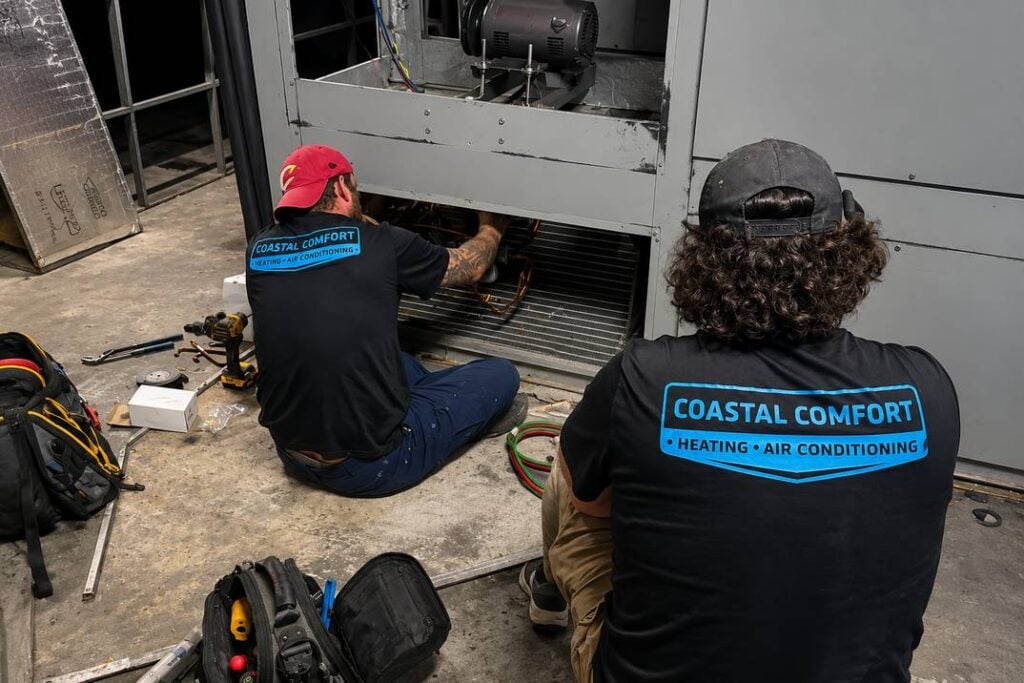
Running a restaurant on the Texas coast is hard enough without your AC dying in the middle of dinner service. At Coastal Comfort, we work on commercial HVAC and refrigeration systems across Galveston every week, and we keep seeing the same painful pattern. Owners try to save money by skipping maintenance, then end up paying many times more in emergency repairs, lost revenue, spoiled food, and unhappy guests.
This guide walks you through the real costs of poor HVAC maintenance for Galveston restaurants, why our coastal climate makes it worse, and what you can do to stop the bleeding before the next heat wave or storm hits.
Why Galveston Is So Hard on Restaurant HVAC
Galveston is a barrier island. That means salt air, year-round humidity, sea breeze, and a long stretch of hurricane season every year. Your HVAC system is fighting all of that, plus the heat and grease of a busy kitchen, every single day.
Industry data suggests coastal environments can wear out HVAC equipment 25 to 40 percent faster than inland sites. A rooftop unit that might last 15 to 20 years in Dallas often gives out in 10 to 12 years here on the island. Without good maintenance, it can fail much sooner.
The three big stressors we see on the West End and across the bay:
- Salt air corrosion on coils, fan blades, electrical contacts, and cabinets
- Heavy humidity that forces your AC to keep dehumidifying long after it has finished cooling
- Storm and wind damage from tropical systems, debris, and power surges
When a system is already working harder than it should, even a small problem like a dirty filter or a low refrigerant charge turns into a much bigger one fast.
💡 Local tip: Outdoor coil corrosion is the single most common issue we diagnose on Galveston Island. A simple coil rinse every few months can add years to a rooftop unit.
The Hidden Costs Most Restaurant Owners Miss
When we talk to restaurant owners about HVAC costs, most of them think about two things: the monthly electric bill and the price of a new unit. Those matter, but they are only part of the picture.
Here are the costs we see eat into restaurant profits in Galveston every season.
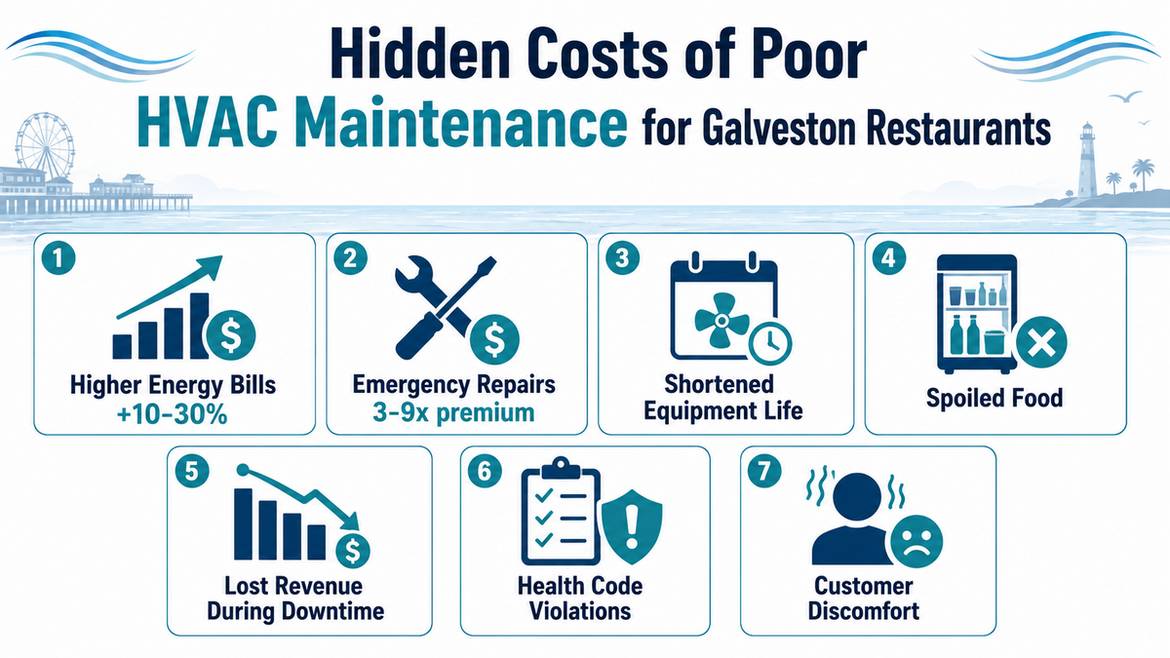
1. Higher Energy Bills
In Texas restaurants, HVAC operating costs already sit at the high end of commercial buildings, often around 4 to 6 dollars per square foot per year. For a 3,000 square foot full-service restaurant, that is roughly 12,000 to 18,000 dollars a year just to heat, cool, and ventilate.
Poor maintenance can push energy use 10 to 30 percent higher than a well-tuned system. On a 15,000 dollar baseline, a 20 percent penalty is around 3,000 dollars a year going straight out the roof vents.
Common culprits we find on service calls:
- Dirty filters and clogged coils restricting airflow
- Low refrigerant from slow leaks at corroded coil joints
- Thermostats out of calibration
- Unbalanced kitchen exhaust pulling in hot outside air
2. Emergency Repair Premiums
This is where the real pain shows up. According to industry estimates, unplanned HVAC repairs cost 3 to 9 times more than the same work done as scheduled maintenance. We have seen restaurants pay 3,500 dollars for an emergency call that would have been a 400 dollar tune-up a few months earlier.
Why the huge gap? Emergencies usually mean overtime labor, expedited parts, weekend rates, and sometimes a full unit replacement instead of a part swap.
3. Shortened Equipment Life
A new full-service restaurant HVAC system in Texas often runs 30,000 to 65,000 dollars installed. Larger restaurants over 5,000 square feet can push 60,000 to 120,000 dollars. When poor maintenance shortens that system’s life by even 5 years, the “lost” capital is around 8,000 dollars a year, every year.
Compare that to a Comfort Club maintenance plan that might cost 500 to 1,500 dollars a year. The math is not close.
4. Spoiled Food and Refrigeration Loss
This one stings the most. A walk-in cooler or freezer that fails overnight can destroy thousands of dollars of inventory before you even open the doors in the morning. Ice machines, prep tables, and reach-ins all live or die based on whether their condensers, gaskets, and refrigerant lines are properly maintained.
On the Texas coast, salt and humidity hit refrigeration condensers especially hard. A condenser coated in coastal grime cannot reject heat, the compressor overworks, and the unit eventually quits, usually on the hottest day of the year.
5. Lost Revenue During Downtime
If your AC fails on a Friday night in July, you are not just losing one evening of service. You are losing reservations, walk-ins, weekend brunch, and the reviews that follow. We have seen restaurants close for 2 to 4 days during peak season because parts had to be flown in.
For a restaurant doing 8,000 to 15,000 dollars a day, a 3-day closure is 24,000 to 45,000 dollars in lost sales, plus payroll for staff who still need to be paid or sent home upset.
6. Health Code Violations and Fines
The Galveston County Health District enforces the Texas Food Establishment Rules. Inspectors care a lot about temperature control, ventilation, and equipment condition. HVAC and refrigeration problems can directly trigger violations like:
- Cold-holding above 41 degrees Fahrenheit
- Hot-holding below 135 degrees Fahrenheit
- Condensate leaks over food prep areas
- Mold or mildew around vents and ductwork
- Grease-loaded vent hoods and unbalanced makeup air
A single failed inspection can mean re-inspection fees, public scoring posted online, and in serious cases temporary closure.
7. Customer and Staff Comfort
Even when nothing is technically broken, a poorly maintained system struggles to keep up. Diners feel sticky, the bar gets stuffy, your line cooks lose efficiency in the heat, and reviews start mentioning the temperature before the food. Comfort is part of the product you sell.
What Galveston’s Climate Actually Does to Your Equipment
To fix the problem, it helps to know exactly what is wearing out your system. Here is what we see on the island, week in and week out.
Salt Air Corrosion
Salt particles ride in on the sea breeze, land on metal surfaces, and pull moisture out of the air to form a thin electrolytic film. That film eats through:
- Condenser and evaporator coil fins and tubes
- Fan blades and motor housings
- Cabinets, mounting rails, and screws
- Electrical terminals, contactors, and circuit boards
Corroded coils leak refrigerant. Corroded electrical parts cause no-start calls and short cycling. Corroded cabinets become structurally weak.
High Humidity and Condensate Overload
Gulf Coast humidity forces your AC to keep dehumidifying long after the thermostat is satisfied. That creates a lot of condensate water, and condensate drains clog easily with grease, dust, and biological growth.
When a drain backs up, water finds the ceiling, the wall, or worse, the food prep line. It is one of the most common emergency calls we get.
Storm and Power Damage
Hurricane season runs from June through November, and even a non-named storm can punish rooftop units with wind, flying debris, and power surges. Compressors and electronic boards hate sudden voltage swings.
💡 Did you know? Coastal capacitors fail roughly twice as often as inland ones because salt accelerates dielectric breakdown. They typically cost 180 to 320 dollars to replace, and they are one of the most common reasons an AC quits during dinner service.
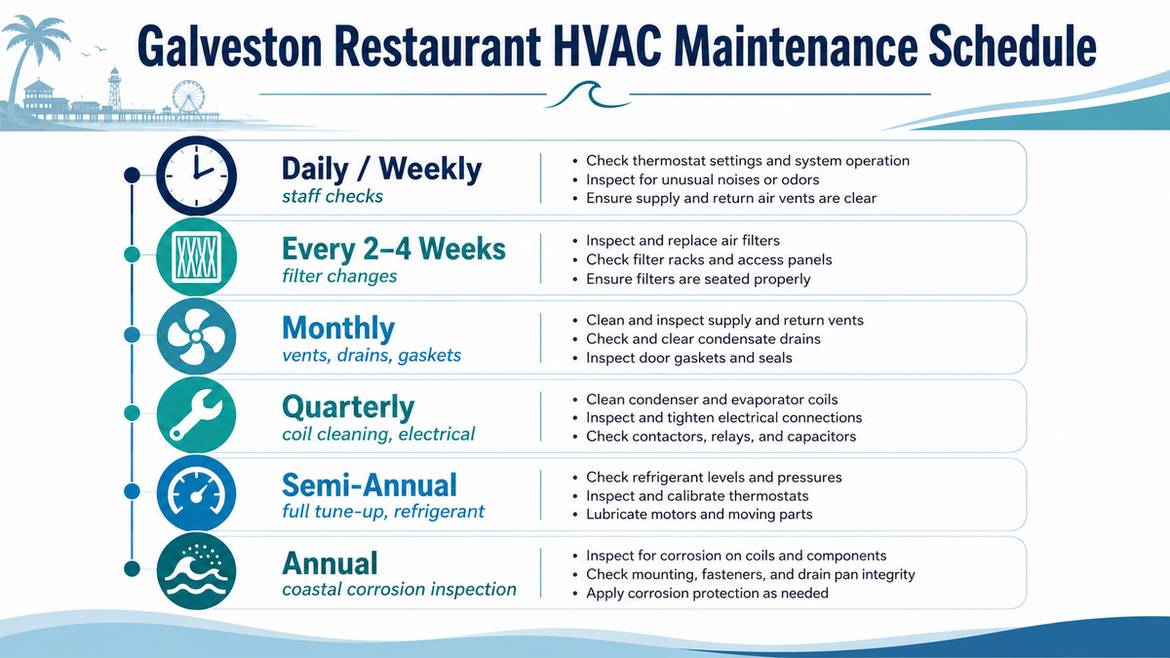
A Simple Maintenance Schedule That Pays for Itself
You do not need to memorize this. Save it, give it to your kitchen manager, and let your HVAC partner handle the bigger items. Here is the schedule we recommend for Galveston restaurants.
Daily and Weekly (Staff)
- Confirm thermostats and zones are set correctly
- Listen for unusual noises in dining room and kitchen
- Check that air is moving in restrooms, bar, and prep areas
- Wipe down accessible vent covers
Every 2 to 4 Weeks
- Replace air filters; kitchens often need biweekly changes due to grease
- Visually check outdoor units for debris, palm fronds, or storm damage
Monthly
- Inspect supply and return vents for grease buildup
- Verify condensate drains are clear and flowing
- Check refrigeration door gaskets for cracks and seal failure
- Wipe down walk-in cooler and freezer condensers
Quarterly (Professional)
- Clean condenser and evaporator coils
- Inspect electrical connections, capacitors, and controls
- Inspect ductwork for leaks
- Refrigeration deep-clean and temperature verification
Semi-Annual (Professional)
- Full system tune-up before peak cooling and before heating season
- Refrigerant charge check and leak inspection by an EPA-certified tech
- Lubricate motors, belts, and bearings; adjust belt tension
- Thermostat calibration
- Air balance check between hood exhaust, makeup air, and dining room supply
Annual (Coastal-Specific)
- Inspect outdoor coils and cabinets for salt corrosion
- Apply protective coil coatings where needed
- Confirm cabinet panels and seals are tight against salt air
- Pre-hurricane season tie-down and surge protection check
How Much Should a Galveston Restaurant Budget for HVAC?
Every kitchen is different, but here are the ranges we see on the island.
- Preventive maintenance plan: 500 to 1,500 dollars per year for a small to mid-size restaurant
- Routine repairs: 300 to 1,500 dollars per incident for capacitors, contactors, motors, and small refrigerant top-offs
- Major repairs: 2,000 to 8,000 dollars for compressor replacements or coil swaps
- Emergency call premium: 3 to 9 times the cost of the same job during normal hours
- Full system replacement: 30,000 to 120,000 dollars depending on size and complexity
A simple way to think about it: spending 1,000 dollars a year on maintenance can easily save 5,000 to 20,000 dollars in repairs, downtime, and spoiled inventory.
Quick Wins You Can Start Today
If you have not had a real HVAC check-up in over a year, here is where we suggest starting.
- Walk the roof. Look at every outdoor unit. Take photos of rust, missing panels, leaning units, or debris.
- Pull every filter. If they are gray, replace them today and set a recurring date.
- Pour a cup of hot water and a little vinegar down each condensate drain to clear early buildup.
- Check temperatures on every walk-in, reach-in, and ice machine. Log them.
- Schedule a professional inspection before the next peak season. Do not wait for it to fail.
If anything on that list looks bad or feels overwhelming, that is exactly the kind of thing we can help with. We are based on Galveston’s West End, so we are already on your side of the bridge when you need us.
The Bottom Line for Galveston Restaurant Owners
Poor HVAC maintenance is one of the most expensive silent costs in a restaurant. It shows up as higher energy bills, faster equipment failure, spoiled food, emergency repair premiums, health code stress, and lost service nights during the busiest months of the year.
At Coastal Comfort, we have spent decades keeping restaurants, bars, and businesses comfortable along the Texas coast. We know what salt air does to a rooftop unit, what hurricane season does to a compressor, and what a clogged condensate line can do to a Friday night.
If you would like us to walk your roof, check your refrigeration, and put together a maintenance plan that fits your kitchen and your budget, reach out to our team.

Frequently Asked Questions
How often should a Galveston restaurant service its HVAC system?
At a minimum, twice a year for a full professional tune-up, with quarterly coil cleanings and biweekly filter changes during peak season. Coastal conditions in Galveston add an annual corrosion inspection that inland restaurants do not need.
What is the most common cause of restaurant AC failure on Galveston Island?
Outdoor coil corrosion from salt air, followed closely by failed capacitors and clogged condensate drains. All three are preventable with routine maintenance.
How much does emergency HVAC service cost compared to scheduled maintenance?
Industry data shows emergency repairs typically cost 3 to 9 times more than the same work performed as planned maintenance, due to overtime labor, expedited parts, and the higher risk of additional damage when a system fails under load.
Can poor HVAC maintenance cause health code violations in Galveston?
Yes. The Galveston County Health District enforces Texas Food Establishment Rules covering temperature control, ventilation, and equipment condition. HVAC and refrigeration problems can trigger violations for improper cold or hot holding, condensate leaks, mold near vents, and grease buildup in vent hoods.
How long should a commercial HVAC unit last in Galveston?
With strong maintenance and coastal-grade equipment, 10 to 12 years is realistic for a rooftop unit on the island. Without maintenance, that life can drop by 25 to 40 percent, sometimes failing in under 7 years.
Is a preventive maintenance plan worth it for a small restaurant?
For most Galveston restaurants, yes. A plan that costs 500 to 1,500 dollars a year typically prevents thousands in emergency repairs, spoiled inventory, and lost revenue, and it usually pays for itself the first time a small problem is caught early.