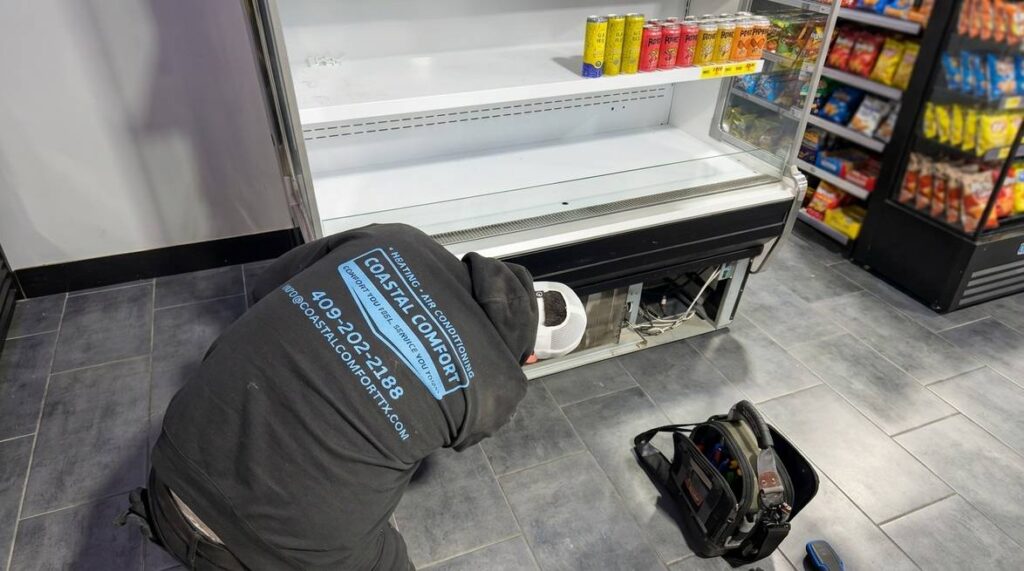
How often walk-in coolers and freezers should be serviced comes down to how hard they work and how harsh their environment is, and on the Galveston coast both run high. These units get no rest, and the heat, humidity, and salt air of the Gulf Coast wear them down faster than the manufacturer’s baseline assumes. Skip service and the cost shows up fast: thousands in lost product overnight, a health-code violation, a swollen utility bill. That is why Galveston businesses lean on Coastal Comfort to set a service cadence built for local conditions.
Why Galveston Is Harder on Walk-in Coolers Than Almost Anywhere Else
Refrigeration equipment does not fail at the same rate in Dallas as it does on Galveston Island. Three local conditions push service intervals to the shorter end of every manufacturer’s recommendation:
Salt-laden air. Onshore winds carry chlorides that settle on outdoor condensers, copper lines, hinges, latches, and fastener heads. Over months, that film accelerates rust and pitting on the same components a technician needs to be clean and airtight. Condenser fins corrode. Door hinges sag. Gasket adhesion drops.
High ambient humidity. Warm, wet outdoor air is the enemy of any refrigerated box. Every time a door opens (or a gasket leaks), that humid air rushes in, condenses on evaporator coils, and turns into frost or ice. Ice on the coil chokes airflow and forces the compressor to run longer and hotter. In a dry inland climate, a small gasket tear is a nuisance. On the Gulf Coast, it can ice up a coil in a weekend.
Long cooling season and hurricane risk. Coastal Texas cooling loads run from March through October, sometimes longer, and hurricane season (June through November) brings power interruptions and surges that can damage sensitive controls. Units get almost no seasonal rest, and every storm is a reminder to double-check performance afterward.
Texas Food Establishment Rules require cold holding at 41°F or below. Galveston County health inspectors specifically watch for that threshold, and “not keeping stored food at 41 degrees or lower” is one of the local violations they cite most often on inspection reports. In other words, a walk-in that drifts is not just an equipment problem, it is a compliance problem.
The Walk-in Cooler and Freezer Service Schedule for Galveston
Here is the schedule we recommend for restaurants, cafes, groceries, and hotels along the Texas coast. It combines what your kitchen team should do in-house with when to call a licensed commercial refrigeration technician.
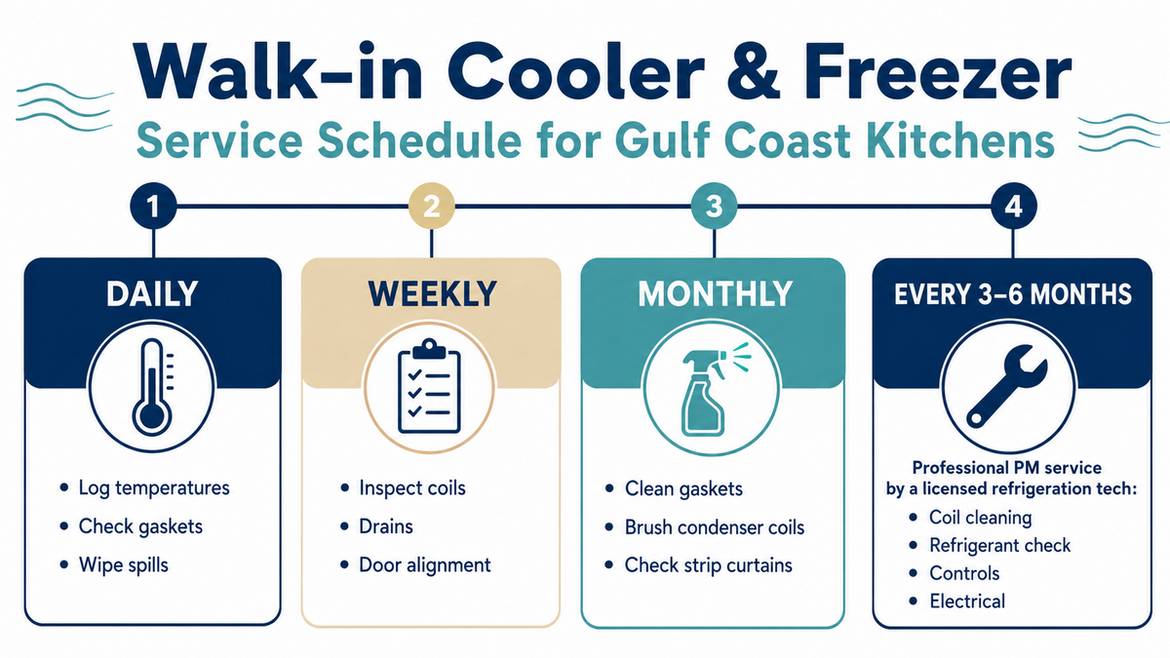
Daily (per shift)
- Log the temperature of each walk-in at least twice per shift (open and close). Coolers should hold 35 to 38°F, never sustained above 41°F. Freezers should hold 0°F to -10°F, and anything above 32°F for two hours is a red flag.
- Verify each door closes fully and latches without being forced.
- Look for standing water, heavy frost around the door frame, dead interior lights, or a compressor that seems to be running non-stop.
Weekly
- Clean interior floors and remove any standing water or ice.
- Inspect door gaskets on all sides for cracks, tears, gaps, or areas that are not sealing.
- Check evaporator coils and drain pans for ice, frost, or blockage.
- Confirm nothing is stacked against the coils or blocking return-air paths.
Monthly
- Clean gaskets and frame surfaces with mild detergent (avoid harsh chemicals that harden rubber).
- Wipe down interior walls and ceiling panels to control mold and mildew, which move fast in coastal humidity.
- Inspect strip curtains and replace damaged or missing strips. In Galveston humidity, strip curtains are one of the cheapest ways to protect the box.
- Perform the “dollar bill test”: close the door on a bill and pull. If it slides out with almost no resistance, the gasket has lost its seal and should be replaced.
Every 3 to 4 months (quarterly PM, strongly recommended for busy Galveston kitchens)
This is a full visit by a licensed commercial refrigeration technician and should include:
- Deep coil cleaning on both evaporator and condenser, with degreaser in kitchen environments
- Refrigerant charge check, system pressures, superheat and subcooling
- Thermostat calibration and defrost cycle verification
- Door gasket, hinge, closer, sweep, and threshold inspection and adjustment
- Drain pan and drain line cleaning to prevent chronic icing and floor puddles
- Fan motor, blade, contactor, and electrical connection inspection
- Corrosion sweep for the salt-air components: coil coatings, copper line fittings, panel seam sealant, fastener heads
- A written report of findings and any parts to schedule for replacement
Every 6 months (minimum acceptable for lightly-used units)
If your box is newer, low-traffic, and lives inside a well-conditioned space, twice-yearly professional PM is the floor. Below that, you are inviting warranty problems and inspection problems.
Annual
- Structural assessment of the walk-in box itself: floor condition, panel joints, insulation, water intrusion, soft spots at the base
- Proactive replacement of parts nearing end-of-life: gaskets, fan motors, contactors, defrost heaters
- Review of energy performance data, remote monitoring alarms, and temperature-log completeness for the year
Skipping any of the professional visits saves a small line item now and creates a large one later. The next section explains why.
What “Professional Service” Should Actually Include
Not every service visit is equal. When a refrigeration technician shows up to your Galveston kitchen for a quarterly or semiannual PM, the invoice should reflect a real, documented inspection, not a five-minute walk-through. Here is what a proper visit looks like:
Performance verification
- Confirm each walk-in pulls down to setpoint and holds temperature under normal load
- Measure superheat and subcooling to verify refrigerant charge and system efficiency
- Review temperature-log trends since the last visit
Cleaning
- Full evaporator coil clean, including any grease film from nearby cooking equipment
- Full condenser coil clean, either indoor or on the roof/exterior pad. On the Gulf Coast, this includes rinsing off salt residue.
- Clean drain pans, blow out drain lines, and confirm free flow
Mechanical inspection
- Compressor sound, amperage, and cycle behavior
- Fan motors, blades, and guards checked for balance, wear, and rubbing
- Suction line insulation checked for damage or absent sections
- Panel and floor inspection for corrosion, water damage, delamination, or heaving
Electrical and controls
- Contactor and terminal block condition
- Loose or corroded wiring, especially in outdoor condensing units exposed to salt air
- Thermostat calibration and defrost timer verification
- Test of high-temperature alarms and door alarms if installed
Door integrity
- Gasket check with the dollar-bill test on all four sides
- Hinge, closer, sweep, and threshold inspection
- Strip curtain condition
- Door heater function on freezer doors
Documentation
- A written report identifying anything worn, corroded, or drifting out of spec
- Clear recommendations, priorities, and part numbers for anything that should be replaced before the next visit
- Records you can hand to a health inspector or attach to a manufacturer warranty claim
If your current provider is not delivering this level of detail, that is often where the “surprise” failure came from.
Warning Signs That Mean Call Today, Not Next Week
Some symptoms can wait for the next scheduled visit. These cannot. Any of the following in a Galveston kitchen should trigger a same-day service call:
Temperature and food safety
- Cooler above 41°F for more than two hours with doors closed and normal load
- Freezer above 32°F for more than two hours
- Persistent temperature creep upward across the day, or wide swings you can’t explain
- Products thawing in the freezer or freezing in the cooler
Ice, frost, and humidity
- Heavy ice buildup on evaporator coils or interior surfaces
- Icicles hanging in the freezer or at ceiling/wall panel joints
- Drain pan constantly full or drain line clogged
- Persistent wet walls, ceilings, or puddles that come back after cleaning
Leaks, odors, and corrosion
- Water leaks inside or around the walk-in (that are not spilled product)
- Oily residue on refrigerant lines or near coils, or a sharp, bitter, “off” smell after ruling out spoiled food
- Progressive rust on hinges, latches, panels, condenser fins, or copper line fittings, especially anything affecting door sealing
Door and panel problems
- Door won’t close fully or requires force to latch
- Gasket has visible tears, gaps, or air movement when you run your hand along it
- Icicles or gaps at wall panel joints
Mechanical, electrical, storm-related
- Grinding, squealing, knocking, or abnormally long compressor cycles
- Unit runs constantly but still won’t hit setpoint
- Tripped breakers, flickering interior lights, burning smells
- A noticeable performance change after a power outage, storm, or flood event
The last one matters especially during Galveston’s June-through-November hurricane season. If your walk-in was stable before a storm and starts acting differently afterward, assume storm-related damage and get it inspected before you refill it with product.
What Neglecting Walk-in Service Actually Costs a Galveston Restaurant
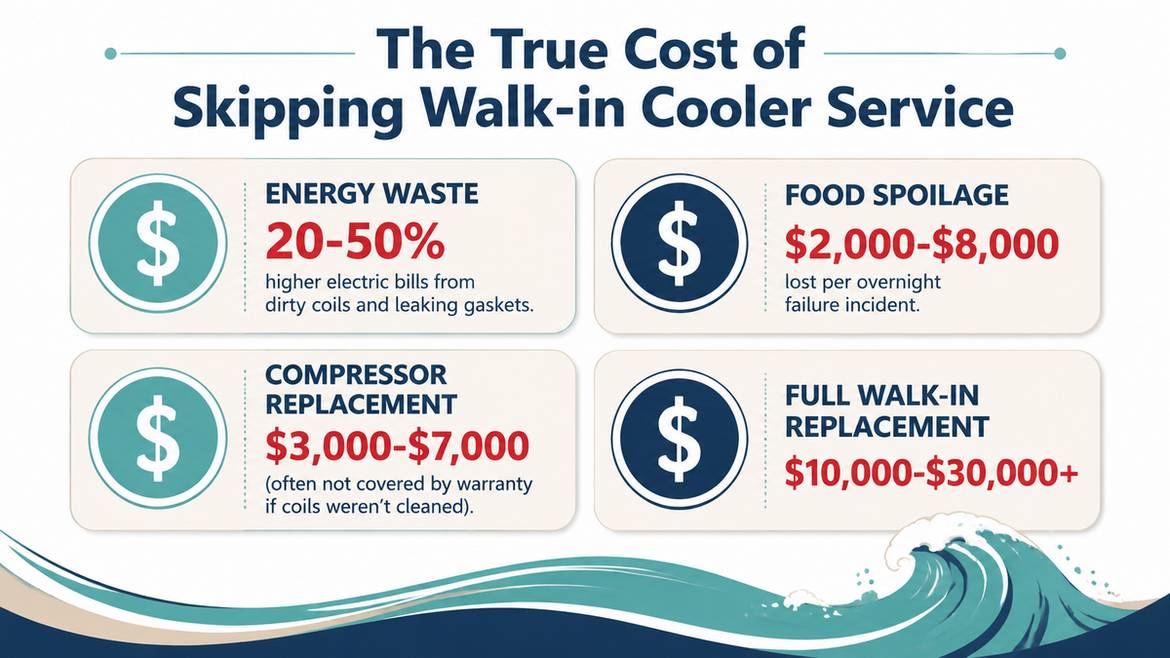
Owners often ask whether quarterly PM is really worth it. It helps to look at what neglect costs across four categories.
Energy bills
Dirty condenser coils act like a sweater around the compressor. Heat cannot escape, so the compressor runs longer, at higher amperage, and works harder. Combine that with leaking door gaskets that let hot, humid coastal air infiltrate the box, and industry estimates put the energy penalty at 20 to 50 percent per unit. On a walk-in that normally costs around $1,500 a year in electricity, that is $300 to $750 in avoidable charges per box, per year. Multiply by two coolers and a freezer, and neglect is a four-figure hit to the utility line item alone.
Food spoilage
A single overnight failure on a walk-in cooler with $4,000 to $10,000 of product typically forces $2,000 to $8,000 in disposal. Fresh seafood, dairy, prepared foods, and specialty cuts all have to be discarded once cold-holding thresholds are breached. Repeated smaller excursions that go unnoticed degrade shelf life and drive up waste even without a headline failure event.
Health code violations
Galveston County health inspectors specifically watch for cold-holding failures and missing temperature logs. Consequences range from citations and fines to mandatory product disposal to temporary closure of the establishment. In a tourist-driven market, an inspection-score hit can outlast the repair by months.
Equipment repair and replacement
Neglect accelerates the failures that hurt most:
- Compressor replacement on a commercial walk-in typically runs $3,000 to $7,000 in labor and parts, more on larger racked systems
- Major component replacements (evaporator coil, condenser coil, door assembly) run $1,000 to $5,000 each
- Full walk-in replacement (box and refrigeration) runs $10,000 to $30,000 and up
And here is the part most operators miss: many manufacturers will deny a compressor warranty claim if you can’t show that condenser coils were properly cleaned. A covered repair becomes a fully out-of-pocket capital expense. The documentation your PM technician leaves behind is often what saves the warranty.
Salt Air, Humidity, and Hurricane Season: The Gulf Coast Adjustments
Almost every walk-in maintenance article on the internet was written for a dry, temperate climate. In Galveston, three specific adjustments matter more than the standard checklist:
Shorten the coil-cleaning interval. If a national article says “clean coils every 6 to 12 months,” treat that as an outer bound. On the Gulf Coast, quarterly is closer to reality, especially for condensers exposed to salt-laden onshore breeze.
Assume gaskets and hardware wear faster. Rubber gaskets exposed to constant humidity and repeated wet-dry cycles lose elasticity faster than they do inland. Coastal metal hardware pits sooner. Budget door gaskets on a shorter replacement cycle and inspect fasteners for rust every visit.
Build a hurricane-season habit. Before storm season, verify that your generator, condensing units, and drain lines are inspected and clear. After any significant storm or power event, walk the units before you refill them: check for water intrusion, debris on outdoor condensers, salt crust on fins, and any temperature drift. A pre-season and post-storm inspection is the cheapest insurance you can buy.
Where Coastal Comfort Fits In
Coastal Comfort has been keeping Galveston homes and businesses cool since 1954. We are the only HVAC and refrigeration company based on Galveston’s West End, which means our techs know salt-air corrosion, humidity, and hurricane-season quirks first-hand.
For restaurants, groceries, hotels, and other commercial operators, our team handles:
- Scheduled preventive maintenance on walk-in coolers and freezers, including quarterly and semiannual plans
- Commercial ice machine repair on Hoshizaki, Manitowoc, Scotsman, and other major brands
- Full commercial HVAC services, including rooftop units, package systems, and split systems
- Routine maintenance and check-ups with Comfort Club plans
- 24/7 emergency service across Galveston County when a walk-in goes down after hours
If you’d like a walk-in PM plan built specifically for a Gulf Coast operation, call us at (409) 202-2188 or reach out through our contact page.
The Bottom Line
Walk-in coolers and freezers on Galveston Island work harder than the manufacturer expected. Salt air, humidity, and hurricane season all shorten the safe interval between professional service visits. Quarterly PM for busy commercial kitchens (or semiannual at absolute minimum) plus a daily and weekly in-house routine is what keeps the walk-in running, the compressor warranty valid, and the health inspector happy.
If your walk-in is overdue for service, showing any of the warning signs above, or you simply want a documented PM plan built for a Gulf Coast operation, Coastal Comfort is ready to help. Call (409) 202-2188 or contact us here. We are open 24/7 for emergencies, and we’ve been keeping Galveston businesses cold since 1954.

Frequently Asked Questions
How often should a walk-in cooler be serviced by a professional?
At least twice a year for a lightly-used unit and every 3 to 4 months for busy Gulf Coast restaurants. Coastal humidity, salt air, and long cooling seasons all push the interval shorter than the manufacturer’s minimum.
How often should a walk-in freezer be serviced?
Freezers follow the same schedule as coolers, but pay extra attention to defrost cycles and door heaters. Any sustained temperature above 32°F is a two-hour emergency, and heavy ice on coils should be treated as an urgent call rather than a slow leak of efficiency.
What is the ideal temperature for a walk-in cooler and freezer?
Coolers should hold 35°F to 38°F, never sustained above 41°F under Texas Food Establishment Rules. Freezers should run at 0°F to -10°F. Sustained readings outside those ranges are food-safety events, not just efficiency issues.
How long does a commercial walk-in cooler last?
Well-maintained walk-ins commonly run 15 to 20 years or more, but coastal environments and skipped PM can shorten that dramatically. Compressor life is the main variable, and it is directly tied to how clean the condenser coils are kept.
Can neglecting maintenance void my walk-in warranty?
Yes. Many manufacturers will deny compressor and refrigeration-component warranty claims if you cannot document proper condenser coil cleaning and maintenance. Keeping written service records from every PM visit protects both compliance and warranty.
What are the biggest warning signs a walk-in needs immediate service?
Cooler above 41°F or freezer above 32°F for two hours or more, heavy ice on evaporator coils, water or refrigerant leaks, gaskets that no longer seal, unusual noises from the compressor, tripped breakers or burning smells, and any sudden performance change after a storm or power event.
Is quarterly walk-in service really necessary in Galveston, or is twice a year enough?
Twice a year is the acceptable minimum for a newer, lightly-used unit in a well-conditioned space. For busy restaurants, groceries, and hotels on Galveston Island, quarterly PM is a better fit for the operating environment and typically saves money once you factor in energy costs and reduced failure risk.