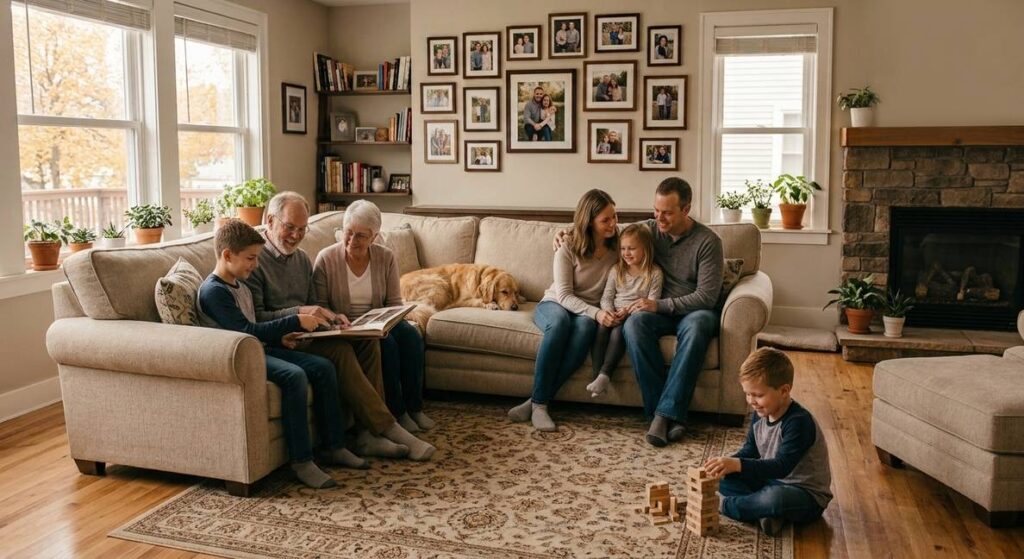
A full house is a happy house, right up until the second bedroom feels stuffy, the kitchen turns into a sauna, and the thermostat starts fighting you. When you double or triple the number of people under your roof, your HVAC system suddenly has a much bigger job to do.
At Coastal Comfort, we work on Galveston homes every day, and the week around a big gathering is when we get the most panicked calls. The good news is that most comfort problems during a full house are predictable, and they are almost all preventable with a little planning.
Here is the guide we walk our neighbors through when they want their home to feel calm, cool, and welcoming, no matter how many people show up at the door.
Why a Full House Feels So Different on the Gulf Coast
Every person in your home is basically a small space heater. The average adult puts out about 100 watts of heat just sitting still, and more when they are cooking, chasing kids, or dancing in the living room. Add long showers, a hot oven, and the front door opening every ten minutes, and your AC is working overtime.
In Galveston, we also fight the Gulf. Our outdoor humidity often sits above 80 percent, and salt air pushes moisture through every gap in the building envelope. So when guests arrive, we are not just adding heat, we are adding moisture too. That combination is what makes a full house feel sticky and stale, even when the thermostat says the temperature is fine.
The fix is not just cranking the AC down. It is a small stack of steady, sensible moves that let your system do its job without struggling.
The Comfort Numbers to Aim For
Before you touch a single vent or filter, it helps to know your targets. These are the ranges we coach Galveston homeowners toward whenever a group is coming to stay.
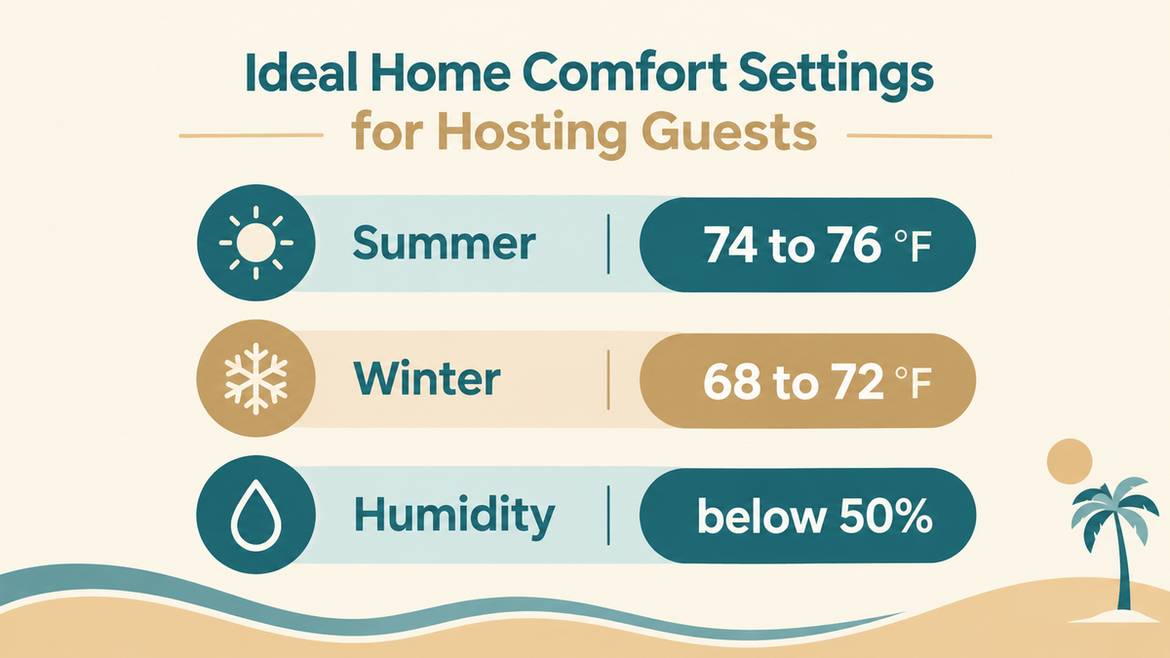
- Summer temperature when occupied: 74 to 76°F, and 2 to 3°F cooler than your usual setting when the house is full
- Winter temperature when occupied: 68 to 72°F during cold fronts, with steady operation instead of big setbacks
- Indoor humidity: 30 to 50 percent, and ideally below 50 percent year round in Galveston
- Operation style: Keep a steady setpoint. Constant thermostat changes cause short cycling, and short cycling makes comfort worse
Local tip: In Galveston, humidity control matters more than shaving another degree off the thermostat. A 76°F house at 45 percent humidity feels far better than a 72°F house at 65 percent.
The Week Before Guests Arrive
The biggest comfort wins happen before the first suitcase hits the floor. Here is our short list for the seven days leading up to a full house.
1. Change the Air Filter
A dirty filter is the number one reason a system cannot keep up when demand spikes. More people mean more skin cells, dust, and pet dander, and a clogged filter starves your blower right when you need airflow the most.
Swap in a fresh 1 inch filter, or a fresh media filter if you have a larger cabinet. In coastal homes, we recommend checking filters every 30 days during heavy-use seasons.
2. Schedule a Tune-Up
If your system has not been serviced in the last 12 months, book a maintenance visit before guests arrive. A tune-up catches weak capacitors, low refrigerant, dirty coils, and blocked drain lines, all of which fail more often under a full load. Our HVAC repair and maintenance team sees the same avoidable breakdowns every holiday season, and almost all of them show up on a routine inspection.
3. Clear the Return Vents
Walk your home and make sure no return grille is blocked by a bed, dresser, curtain, or box of decorations. Returns are how your system breathes. Blocking one is like pinching a straw.
4. Check the Outdoor Unit
Rinse the outdoor condenser with a garden hose, from the top down, to knock salt and pollen off the fins. Clear any leaves, mulch, or storage that has crept within two feet of the coil. On the coast, salt air corrodes fins fast, so gentle regular rinsing extends the life of the unit.
5. Test the Thermostat Program
If you use a smart or programmable thermostat, adjust the schedule for your guest days. You want the house at your target temperature about one hour before guests arrive, not after. Trying to cool a 82°F house down to 74°F once everyone is inside is a losing battle.
Day of Arrival: The Pre-Cool Playbook
The single most useful move on the day of a big gathering is a proper pre-cool. Here is how we run it.
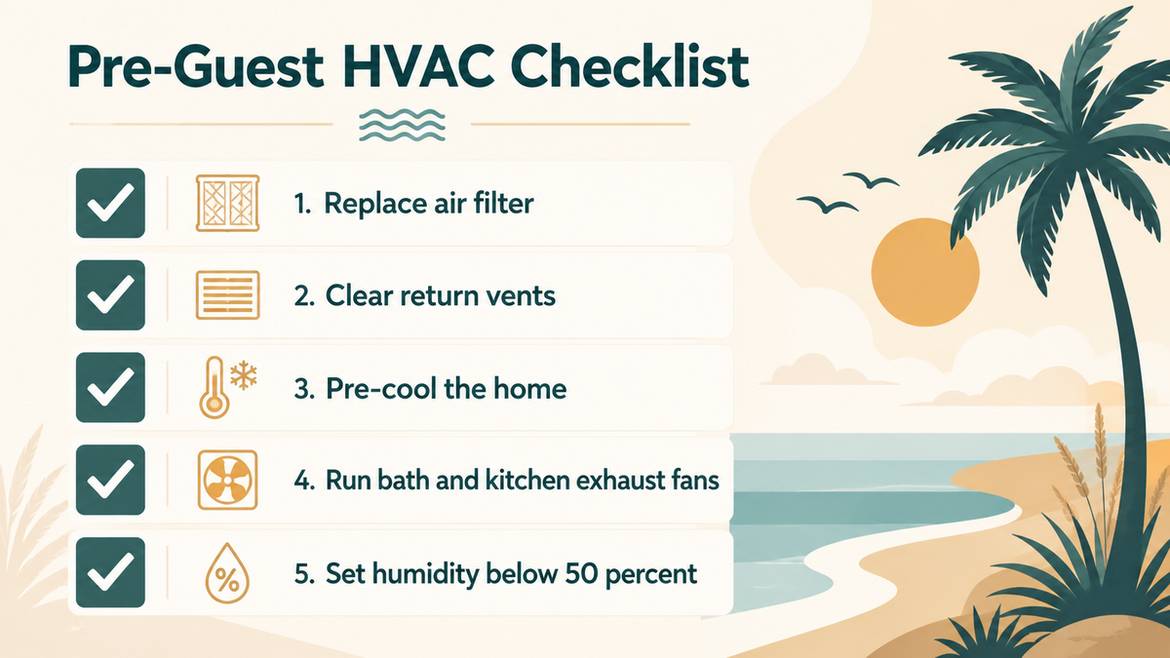
- Two to three hours before arrival, drop the thermostat 2 to 3°F below your normal setpoint. If you usually run at 75°F, aim for 72 or 73°F.
- Close blinds and shades on any window getting direct sun. Radiant heat through glass can add several degrees to a room in an afternoon.
- Turn on bathroom and kitchen exhaust fans about 20 minutes before guests arrive, and again during cooking and showers. These fans pull moisture out fast, which lets your AC focus on temperature instead of humidity.
- Set ceiling fans to spin counterclockwise in summer, at medium speed. Fans do not cool a room, they cool the people in it, so they only need to run in occupied spaces.
- Leave interior doors open so return airflow can pull evenly through the house. A closed guest room becomes an oven very quickly.
Quick insight: Pre-cooling works because a house is a giant thermal sponge. Walls, floors, and furniture all soak up cool air. When guests walk in with body heat, cooking steam, and open doors, the sponge has to soak up all that new load, and a cooler starting point buys you an hour or two of grace.
Room by Room: Balancing a House That Suddenly Feels Uneven
Even a well-tuned system will feel uneven when 12 people are packed into three rooms. Here is how to steer comfort where it needs to go.
Living Room and Kitchen
This is where heat piles up. Bodies, ovens, TVs, and the front door all live here. During peak hours:
- Keep the kitchen exhaust hood running
- Point a small fan toward the ceiling to break up hot pockets
- Avoid running the oven for more than 45 minutes if you can help it. Combining oven use with slow cooker or air fryer prep spreads the heat load out
Guest Bedrooms
Guest bedrooms are usually the coldest complaint, especially rooms at the end of a duct run. To help:
- Open the supply vent fully and leave the door open during the day
- Add a small oscillating fan to help air circulate
- If a room stays uncomfortable overnight, a portable air purifier with a fan mode gives the illusion of steady airflow and helps guests sleep
Bathrooms
Guest bathrooms turn humid fast. A 15 minute shower can push a small room past 80 percent humidity. Ask guests to run the exhaust fan while showering and for 10 minutes after. If your bath fan is old or noisy, guests will not use it, and it is worth replacing.
Managing Humidity, the Galveston Superpower
Humidity is the difference between a home that feels crisp and a home that feels like a beach towel. During a full house, humidity control is where most Galveston homeowners lose the game.
A few moves make a real difference:
- Cook with lids on pots. Every uncovered pot dumps moisture into the air.
- Run the AC fan on AUTO, not ON. In humid climates, running the fan continuously re-evaporates water off the coil back into the house. AUTO lets that moisture drain outside.
- Consider a dehumidifier for the busiest rooms. A portable 50 pint unit in the main living area can pull 3 to 5 gallons of water out of your air per day during a full house.
- Watch for condensation on windows. If your windows fog up when guests are inside, indoor humidity is too high, and it is time to open bath fans, run a dehumidifier, or call us.
Good to know: Your air conditioner is also a dehumidifier, but only when it runs long enough to pull water off the coil. If your AC cools too fast and cycles off, humidity climbs. This is one reason an oversized system feels worse in Galveston than a properly sized one.
Hosting During a Cold Front
Galveston winters are mild until they are not. When a norther rolls in and drops us into the 30s or 20s, hosting rules change.
- Set the thermostat around 68 to 72°F when occupied. Steady is better than swinging.
- Do not use big setbacks at night during a hard freeze. Recovering a cold house strains the system and can cause frozen pipes in exterior walls.
- Reverse ceiling fans to clockwise at low speed. This pulls warm air down from the ceiling without creating a chilly draft.
- Open cabinet doors under exterior-wall sinks and let a small drip run from one faucet to protect pipes.
- If your furnace has not been checked this season, get it looked at before the first cold front. Our heating repair team works long hours during the first freeze because homeowners wait until it is 28°F and the furnace will not fire.
Special Note for Vacation Rental Hosts
If you own a short-term rental in Galveston, Tiki Island, or Jamaica Beach, every guest turnover is a “full house” event. Long showers, high-volume laundry, and doors constantly opening put your system through more cycles than a single-family home.
We support a lot of hosts on the coast, and we built our vacation rental owners program around a simple truth: an HVAC failure on a booked weekend costs a lot more than preventive service. Priority scheduling, seasonal check-ins, and a written maintenance record protect your guest reviews and your bottom line.
When to Call an HVAC Pro Before Guests Arrive
Some warning signs are worth catching before the house is full. Call us if you notice:
- Warm air coming from vents even with the thermostat set low
- Ice on the outdoor unit or on the refrigerant line
- A burning smell when the furnace first fires up
- Loud rattles, screeches, or repeated on-off cycling
- Water pooling near the indoor air handler
- Rooms that will not stay within 3°F of the rest of the house
We would rather do a $95 diagnostic on a Tuesday than an emergency repair at 9 PM on Thanksgiving. If any of these show up in the two weeks before a gathering, get ahead of it. You can reach our team here or call us seven days a week.
Ready for a Full House? We Can Help
Hosting is one of the best parts of living on the Gulf Coast. A big gathering should feel warm and welcoming, not stuffy and stressful. Most of the discomfort we see in Galveston homes during a full house comes from small, fixable issues in the system, and a little preparation goes a long way.
If you want a fresh set of eyes on your setup before your next gathering, that is what we do at Coastal Comfort. We can tune your system, walk your home for airflow and humidity issues, and give you a plan that fits your house and your guest schedule. Reach out through our contact page. We will help you host with confidence.
Frequently Asked Questions
What temperature should I set my thermostat to when hosting guests in summer?
Aim for 74 to 76°F, and set it 2 to 3°F cooler than your usual comfort level about two hours before guests arrive. That head start lets the system settle before body heat, cooking, and door traffic add to the load.
How do I keep my house from feeling sticky when it is full of people?
Focus on humidity, not just temperature. Run bathroom and kitchen exhaust fans, keep the AC fan on AUTO, cover pots while cooking, and consider a portable dehumidifier for the busiest room. Below 50 percent humidity feels dramatically better than the same temperature at 60 percent.
How often should I change my air filter when the house is full?
Change your filter the day before guests arrive, and check it every 30 days during high-use seasons. Extra people mean extra dust, hair, and skin cells, and a clogged filter is the fastest way to lose airflow when you need it most.
Is it better to lower the thermostat all at once or gradually?
Gradually, and ahead of time. Big sudden drops force short cycling and rarely feel colder because humidity does not come down fast enough. A pre-cool of 2 to 3°F over two to three hours works far better than a 6°F drop in ten minutes.
Why does my guest bedroom feel warmer than the rest of the house?
Rooms at the end of a duct run get less airflow, and closed doors trap heat. Open the door during the day, fully open the supply vent, and add a small fan. If the imbalance is more than a few degrees, the system may need a duct check or a zoning solution.
Should I turn my HVAC system off when leaving for a holiday visit?
No. Set it to 80 to 82°F in summer or 60 to 62°F in winter, and let it maintain those setpoints. Fully shutting the system off lets indoor humidity climb, which invites mold and makes the house harder to comfortably re-cool when you return.