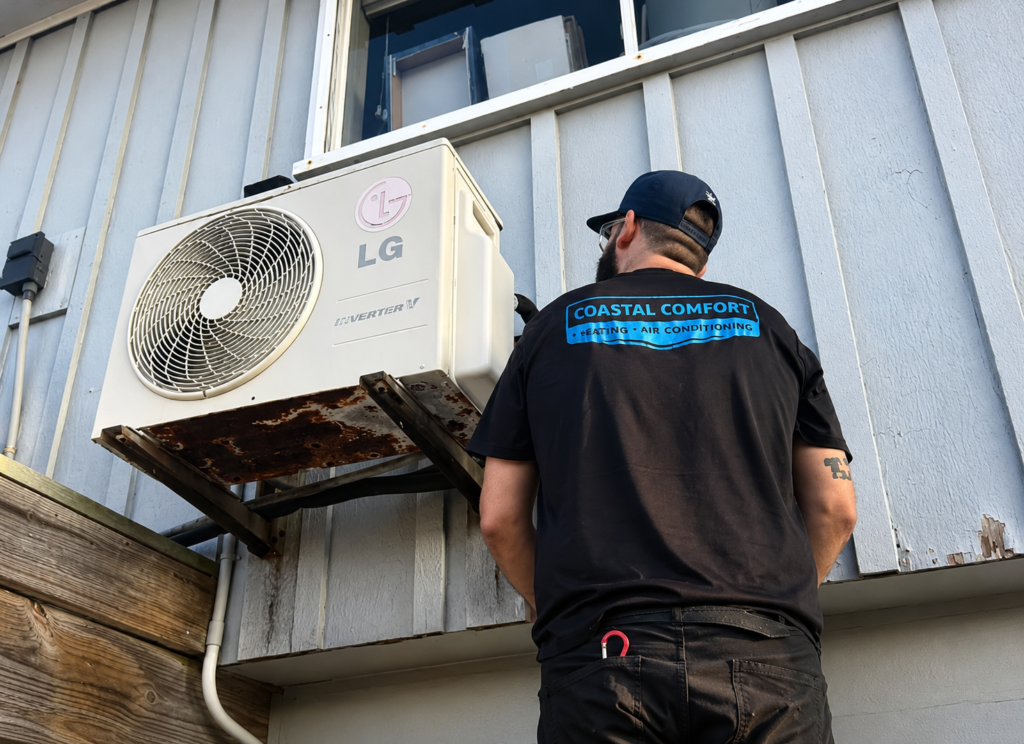
Living on the Gulf Coast means your HVAC system never really gets a day off. Salt air corrodes metal components faster than inland climates. Summer humidity pushes cooling systems harder and longer than anywhere else in the country. And when a coastal storm rolls through, the aftermath can leave your equipment working overtime just to recover.
Most generic maintenance advice wasn’t written with any of that in mind. This seasonal HVAC guide was. Coastal Comfort put it together specifically for Gulf Coast homeowners who want to stay ahead of the demands this climate places on their systems, season by season, before a small issue becomes an expensive repair.
Winter HVAC Maintenance (December – February)
Winter on the Gulf Coast is mild compared to most of the country, but that doesn’t mean your system gets a break. Cooler temperatures and occasional cold snaps still put your heating system to work, and the combination of salt air and winter moisture can quietly accelerate wear on components you haven’t checked in months.
Change Your Air Filters Every 30 to 60 Days
Coastal air carries more particulates than inland environments. A clogged filter forces your system to work harder than it should, and in a region where airborne salt and humidity are constant, filters fill faster than you might expect.
Inspect Your Heating System Early
Listen for unusual sounds and pay attention to uneven heating across rooms. If certain areas aren’t reaching temperature, that’s a signal worth investigating before the coldest days arrive, not after.
Seal Gaps Around Doors, Windows, and Ductwork
Even small drafts in a coastal home add up quickly, especially when humidity gets in through the same cracks that let warm air out. Check weatherstripping and caulking at the start of the season.
Schedule a Mid-Season Check-Up
If your system hasn’t been serviced since fall, a professional inspection is the fastest way to catch small issues before they turn into expensive repairs during peak demand.
Spring HVAC Maintenance (March – May)
Spring is the most strategic time of year for HVAC care. Temperatures are still comfortable, system demand is low, and any issues left over from winter are easier and less expensive to address now than in July. Think of spring maintenance as insurance against a summer breakdown.
Clean the Condenser Coils and Outdoor Unit
After months of salt air and winter weather, buildup on the coils reduces efficiency and makes your system work harder to cool the same space. Clear debris from around the unit and give the coils a thorough cleaning before the heat sets in.
Test Your Air Conditioning Before You Need It
A quick run in mild spring weather tells you whether everything is working properly while there’s still time to schedule a repair without waiting weeks for a peak-season appointment.
Check Refrigerant Levels
Low refrigerant often points to a slow leak. In a humid coastal climate, that kind of inefficiency compounds quickly once summer arrives. A technician can inspect and recharge the system if needed.
Book a Professional Spring Tune-Up
This is the most important maintenance visit of the year for Gulf Coast homeowners. A full inspection now sets your system up for the long cooling season ahead.
Summer HVAC Maintenance (June – August)
Summer along the Texas coast is long, humid, and unforgiving on HVAC equipment. Your system may run almost continuously during peak months, and that sustained demand accelerates wear on every component. A few proactive steps during the season can make the difference between a comfortable home and an emergency service call on the hottest day of the year.
Increase Filter Changes to Every 30 Days
During peak cooling season, filters fill faster and restricted airflow makes an already-stressed system work even harder. Monthly changes are the single easiest thing you can do to protect your equipment.
Keep the Outdoor Unit Clear of Debris
Leaves, grass clippings, and storm debris block airflow to the condenser and cause the unit to run hotter than it should. A quick visual check every few weeks is all it takes.
Inspect Ductwork for Leaks
Coastal homes with older ductwork can lose a significant portion of cooled air before it ever reaches the living space. Sealing gaps improves efficiency and lowers your energy bill through the most expensive months of the year.
Adjust Your Thermostat for Peak Hours
Use a programmable or smart thermostat to reduce the load during the hottest part of the afternoon. Even a modest adjustment reduces strain on your system and adds years to its lifespan over time.
Fall HVAC Maintenance (September – November)
Fall is the transition season, when your system shifts from months of heavy cooling work to preparing for heating. It’s also one of the easier seasons to book a service appointment before winter demand picks up. Don’t let the mild weather fool you into skipping this step.
Test Your Heating System Before You Need It
Running the heat for the first time in months sometimes surfaces issues that sat unnoticed all summer. Better to find them in October than on the first cold night in December.
Clean Vents and Inspect Your Ductwork
Dust, humidity, and coastal air quality all contribute to buildup in ducts over time. Clean ducts mean better airflow and cleaner air through the entire heating season.
Test Carbon Monoxide Detectors
If your home uses a gas furnace, test your detectors and replace batteries while it’s still easy to schedule any follow-up if something needs attention.
Schedule a Full Fall Maintenance Visit
A technician can inspect the entire system, address anything that came up over the summer, and make sure your heating equipment is ready before temperatures drop. Coastal Comfort’s fall maintenance visits are the most popular of the year for a reason.
Why a Seasonal Maintenance Schedule Pays for Itself
The coast is hard on HVAC systems. Salt air, extended cooling seasons, and high humidity mean your equipment works harder and degrades faster than in most other climates. A consistent seasonal maintenance schedule is the single most effective thing you can do to protect that investment.
Routine care keeps energy bills lower by ensuring your system runs at full efficiency. It reduces the risk of emergency repairs at the worst possible time. It extends the usable life of your equipment, delaying a replacement that can easily run into the thousands. And it keeps indoor air quality high through regular filter changes and duct inspections, which matters especially in a region where outdoor air quality shifts with every storm and season.
Schedule Your Seasonal HVAC Maintenance With Coastal Comfort
Coastal Comfort specializes in the specific demands of Gulf Coast homes. Whether you’re due for a spring tune-up, summer check-in, or full fall inspection, we’ll make sure your system is ready for whatever the season brings. Contact us today to schedule your next maintenance visit.
Frequently Asked Questions
How often should I schedule professional HVAC maintenance? Twice a year is the standard recommendation: once in spring before the cooling season and once in fall before you start running the heat. For Gulf Coast homeowners, that schedule matters more than in most climates because salt air and high humidity put extra wear on components year-round. Coastal Comfort’s Maintenance & Check-Up service covers both visits and keeps your system running efficiently between appointments.
What’s included in a seasonal HVAC tune-up? A Coastal Comfort maintenance visit includes a full system inspection, cleaning of key components like condenser coils and drainage lines, refrigerant level check, thermostat calibration, and a review of any parts showing wear. The goal is to catch small issues before they turn into repairs, and to make sure your system is set up for the season ahead.
How do I know if my HVAC system needs a repair or a full replacement? A general rule: if the repair costs more than half the price of a new system and your unit is over 10 years old, replacement usually makes more financial sense. Coastal Comfort offers diagnostics for $95, which gives you a clear picture of what’s going on and an honest recommendation on whether a repair or a new installation is the right call.
What should I do if my HVAC stops working in the middle of summer? Call Coastal Comfort’s emergency line at (409) 202-2188. We offer 24/7 same-day emergency response, so you’re not left without air conditioning during the hottest months of the year. The sooner you call, the faster we can get a technician out to diagnose and fix the problem.
Does Coastal Comfort service commercial properties? Yes. In addition to residential HVAC, Coastal Comfort provides commercial HVAC solutions for businesses and properties of all sizes, including walk-in cooler and freezer service and ice machine repairs. If you manage a commercial space on the Gulf Coast, our team understands the specific demands that coastal humidity and heat place on commercial refrigeration and climate control systems.
How does salt air affect my HVAC system, and what can I do about it? Salt air accelerates corrosion on metal components, particularly the condenser coils, electrical connections, and refrigerant lines in your outdoor unit. Over time, that corrosion reduces efficiency and shortens the lifespan of your equipment. The best defense is regular professional maintenance, keeping the area around your outdoor unit clean, and scheduling inspections more frequently than you might in an inland climate. Coastal Comfort’s technicians are trained specifically to identify and address salt air damage before it becomes a costly repair.