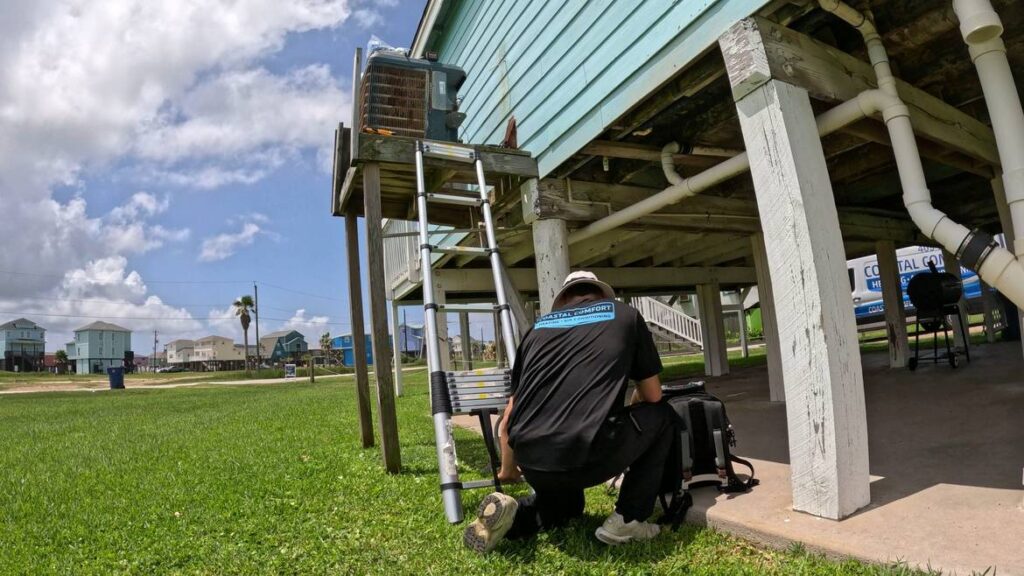
If you live on Galveston Island or anywhere along the Texas coast, your heater probably works fewer weeks a year than in most of the country. That short heating season is exactly why a heating tune-up in Galveston before the first cold front matters so much. Your system sits idle for eight or nine months, salt air quietly works on every metal surface, and then one cool October evening you flip the thermostat from cool to heat for the first time and expect it to just go.
Sometimes it does. Sometimes it does not, and the same weekend that brought the first north wind also brought a queue of neighbors calling every HVAC company in the county at the same time.
This guide is here to help you get ahead of that. We will walk through when the first fronts actually arrive in Galveston, what a real tune-up should include for a coastal home, the warning signs that mean you should call sooner rather than later, and a short DIY check you can do this weekend. Coastal Comfort has spent more than 70 years keeping island homes, mainland houses, and vacation rentals comfortable, and everything below reflects what our technicians look for on a real service call.
Why a Pre-Cold-Front Tune-Up Matters More on the Coast
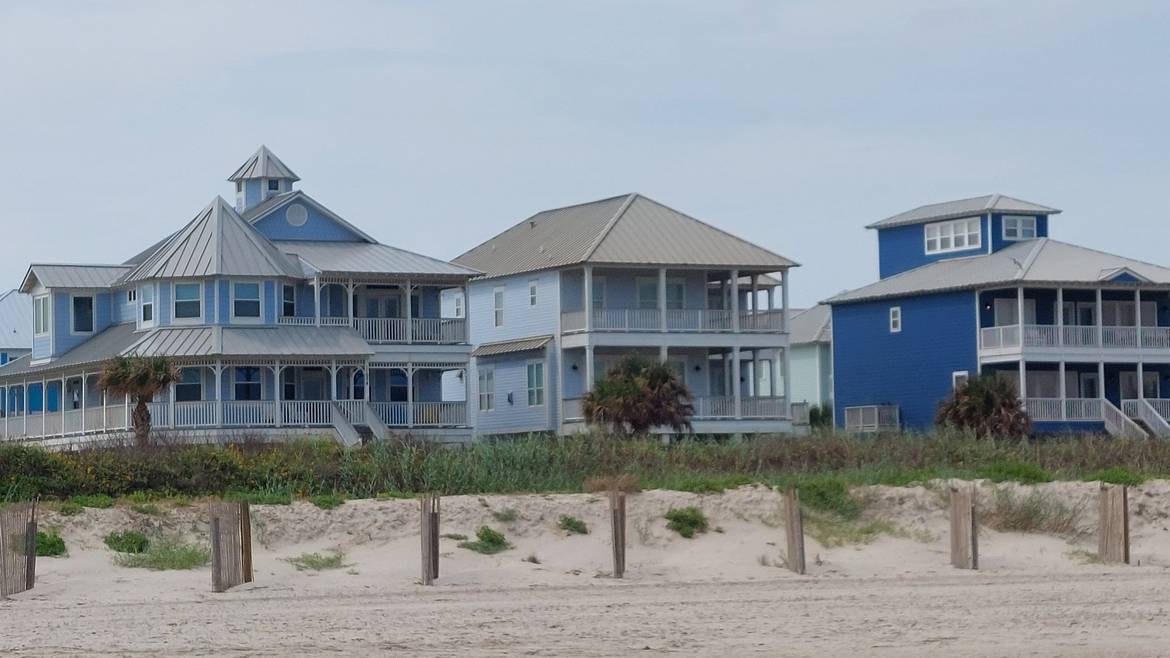
Galveston winters are mild, but the way the weather arrives is what stresses a heating system. Fronts do not creep in gradually. They cross the coast in a matter of hours, drop the low temperature 20 to 25 degrees, and bring gusty north winds that pull warm air right out of a leaky house. Your heater goes from zero to full run time in a single evening.
A few local factors make that first run harder than it looks:
- Long idle season. Most Galveston homes run air conditioning nine to ten months a year. When you switch to heat in late October, the system has not moved warm air in a very long time.
- Salt air. Sodium chloride in the sea breeze settles on outdoor coils, contactor points, relay contacts, and control boards. Salt-corroded contactors are one of the most common causes of heating failures we see on Galveston Island.
- Humidity. Even when it is not raining, coastal humidity works on igniters, flame sensors, sequencers, and circuit boards. Ceramic igniters can crack from repeated humidity cycling, and flame sensors that look fine in July can be too corroded to detect a flame in November.
- Wind and insulation. Older island homes, elevated pier-and-beam houses, and many rentals are built for cooling, not heating. When the wind kicks up behind a front, they lose heat quickly and the furnace or heat pump has to work harder to keep up.
The result is a very predictable pattern. Systems limp through the first cool front, then fail during the second or third when demand is higher and the phones are already busy. A tune-up done in late September or early October catches almost every one of those issues before they turn into a no-heat call at 10 PM on a Friday.
When the First Cold Front Actually Hits Galveston
If you are timing your tune-up around the weather, it helps to look at what “cold front season” really means here. Long-term climate data and NOAA analyses of Galveston Bay give a very clear picture.
- Cold front season runs September through May, with fronts arriving on a roughly six-day return period during those months.
- The first weak fronts show up as early as mid-September, often just shaving a few degrees off the daytime high.
- The first noticeable fall front usually arrives in late October, dropping overnight lows from the low 70s into the low 50s and sometimes the upper 40s.
- November highs settle near 73 degrees with lows around 56, cool enough that most homes start using heat overnight.
- December and January bring the coldest fronts, with a handful of nights in the 30s and, on average, about two nights per year below 32 degrees.
That timing tells you two useful things. First, if you have not done a tune-up yet this year, the window is now. Second, even in a mild winter the system will still see several strong cycles, and those are the moments where a marginal contactor or a dirty flame sensor will finally give up.
What a Real Heating Tune-Up Includes on the Coast
A tune-up is only as good as the checklist behind it. On the Gulf Coast that checklist has to look for the same things technicians check anywhere else, plus a full salt and moisture inspection you would not necessarily do in Dallas or Austin.
Here is what a comprehensive visit should cover on a Galveston home, whether you have a heat pump, a gas furnace, or an electric air handler with heat strips.
Thermostat and Controls
- Verify the thermostat is calibrated and responds correctly to setpoint changes
- Confirm the system starts, cycles, and shuts off cleanly
- Test safety and control logic (limit switches, pressure switches, defrost logic, aux heat staging)
Airflow, Filter, and Ductwork
- Replace or clean the filter (this alone prevents a huge portion of first-front failures)
- Measure airflow at multiple vents to catch weak zones early
- Inspect accessible ductwork for leaks, salt-driven corrosion, or damaged sealing
Electrical and Controls (the Coastal Focus)
- Inspect and tighten every electrical connection
- Test capacitors, contactors, and motors under load
- Look for oxidation on relay contacts, terminal strips, and screw terminals
- Inspect control boards for green or white corrosion and moisture intrusion marks
Heat Pump Checks
- Clean indoor and outdoor coils, including salt removal on the outdoor unit
- Test the reversing valve so the system does not stay stuck in cooling mode
- Verify the defrost cycle runs correctly on heating calls
- Confirm auxiliary heat strips activate only when actually needed
- Check refrigerant pressures under a heating call and inspect line joints for corrosion-driven leaks
Gas Furnace Checks
- Clean the burner assembly and ignition components
- Test the igniter and clean the flame sensor
- Inspect the heat exchanger for cracks, rust, or thinning metal
- Perform a carbon monoxide check around the furnace and living space
- Inspect the flue and venting for corrosion, blockage, and proper draft
Moisture and Drainage
- Flush condensate drain lines and pans to prevent overflows and musty smells
- Inspect for standing water, rust, or microbial growth around indoor units
- Confirm that everything is dry, sealed, and properly sloped
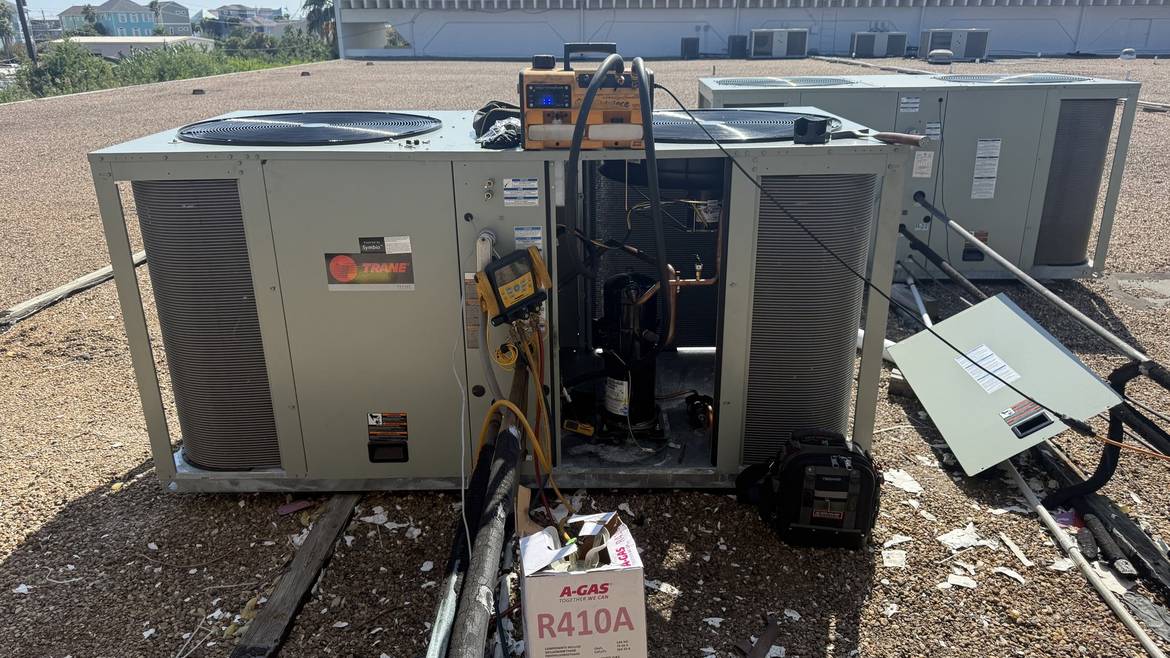
A local company doing this well should be spending an hour or more on a tune-up and giving you a written report at the end. If someone knocks a full inspection out in 15 minutes, they are not really looking.
Coastal Failure Points We See Every Season
Because Galveston homes deal with salt and humidity year round, the failures that show up on the first cold front tend to cluster around a short list of components. Knowing them helps you understand why your technician spends so much time on the little things.
- Salt-corroded contactor points. The most common cause of no-heat calls on the island. The contactor is the electrical switch that lets the outdoor unit run. Salt oxidation on the contact surfaces prevents solid electrical connection.
- Oxidized relays and terminal strips. Similar to contactors, these develop a thin oxidation film that raises resistance, causes intermittent operation, and produces frustrating “it works sometimes” complaints.
- Corroded flame sensors. On gas furnaces, a corroded sensor cannot detect the flame reliably, so the furnace lights briefly, then shuts down over and over.
- Cracked igniters from humidity cycling. Ceramic igniters do not love the constant swing between humid and dry conditions. Many fail on the very first strong heating call of the year.
- Reversing valves stuck by inactivity. On heat pumps, the valve that switches between cooling and heating can stick if it has not moved in ten months. You feel this as “the heat is blowing cold.”
- Salt-clogged outdoor coils. Restricted airflow across the coil raises operating pressures, wastes energy, and can trigger safety shutdowns.
- Refrigerant leaks at corroded joints. Salt eats away at coil joints and line set connections, quietly reducing capacity all summer and showing up as weak heat in winter.
- Musty odors from wet or dirty coils and clogged drains. Common in humid coastal indoor units and usually easy to prevent with a proper drain flush and coil clean.
None of these are exotic. They are exactly the checkpoints a good coastal tune-up is designed to catch.
What a Tune-Up Typically Costs in Galveston
Pricing varies by system, promotion, and how thorough the visit is. In the Galveston area you can expect roughly:
- Preventive tune-up (full inspection, cleaning, performance test): commonly about $120 to $225 in the area, with fall specials closer to the low end.
- Diagnostic service call (no maintenance): roughly $70 to $230 depending on complexity and time of day. Some companies credit this fee toward the repair if you authorize the work.
- Coastal Comfort’s residential diagnostic is $95, and we provide a written quote before any repair is authorized.
- Our Comfort Club plan is $150 per year for one system and includes two check-ups (one before summer, one before winter).
The math on maintenance is usually pretty friendly. A tune-up in this price range that catches one weak capacitor, a dirty coil, and a corroded contactor typically saves several times its cost in avoided emergency labor and utility waste.
A Fast DIY Check You Can Do This Weekend
You should still book a professional visit, but a short home check can catch obvious issues and confirm the system runs at all before the first front. Pick a mild afternoon and do the following:
- Replace the filter. Use the right size and a MERV rating your system was designed for. Very high MERV filters on older equipment restrict airflow and can cause overheating.
- Turn the thermostat to heat and set it 3 to 4 degrees above room temperature. Wait a minute or two.
- Listen and feel. You should hear the blower start and feel warm air within a couple of minutes. On a heat pump the outdoor fan should also start.
- Let it run 15 to 20 minutes. Confirm it reaches the setpoint, then shuts off cleanly. Watch for any error codes on the thermostat.
- Walk the vents. Check that every room has real airflow and that the air coming out is warm and dry, not musty.
- Look at the outdoor unit. Clear leaves, look for corrosion on the metal cabinet, and check that the coil fins are not caked with salt or dirt.
- Test smoke and carbon monoxide alarms. If you have gas heat and your CO alarm is more than 5 to 7 years old, replace it.
If any step gave you a strange noise, a burning smell, uneven heat, cold air, or a system that would not stay running, do not push through the first cold front hoping for the best. Book a tune-up or a diagnostic visit right away.
Warning Signs That Mean Call Right Now
Some heating problems are annoyances. Others are safety events. If you notice any of the following, shut the system off and call for same-day service.
- Rotten-egg or gas odor near the furnace or gas lines
- A carbon monoxide alarm going off, or symptoms like headache, dizziness, or nausea while the heater is running
- Burning electrical smell, smoke, or visible sparking
- A yellow, flickering, or discolored burner flame on a gas furnace (a healthy flame is steady and blue)
- Loud banging, clanking, grinding, or squealing at startup
- Cold air blowing from the vents when the thermostat is set to heat
- Rapid on and off cycling every minute or two
- Visible soot, scorch marks, or water pooling near the equipment
Less urgent but still worth a scheduled call within a week or two:
- Uneven heat between rooms
- Weak airflow from vents
- The system runs constantly but never quite reaches the setpoint
- Musty or moldy smell when the heat kicks on
- A gradual month-over-month climb in your energy bill
- You cannot remember the last time you had maintenance done
Special Notes for Vacation Rentals and Second Homes
A big share of Galveston, Tiki Island, and Jamaica Beach housing is short-term rental or second-home use. Those systems have a rougher life than a full-time residence. They sit idle for long stretches, they run at wildly different setpoints depending on the guest, and a broken heater on a guest’s first night in November turns into a review problem very quickly.
If you own or manage a rental, we recommend three habits:
- Book the tune-up before turnover season. Late September through mid-October is the sweet spot for the heating side.
- Standardize the thermostat. A locked or limited-range smart thermostat protects the system and your utility bill.
- Have a same-day contact ready. Coastal Comfort‘s Vacation Rental Owners program is built exactly for this: scheduled maintenance, priority same-day service, and coordination with your cleaning and property management team so guests never notice a hiccup.
Where to Go From Here
If you are ready to hand the details to a technician who lives and works on the coast, you have a few options depending on where you are on the map.
- Learn more about our heating diagnostic and repair work at Heating Repair in Galveston, TX.
- See the full menu of services at HVAC Repair Services in the Galveston Area.
- For rental homeowners and property managers, visit Vacation Rental Owners.
- Off-island? We also serve Texas City, League City, Tiki Island, Kemah, Dickinson, Hitchcock, Seabrook, Friendswood, Bacliff, and Freeport.
Ready for the First Front?
The first cool morning of the season should feel good, not stressful. A one-hour heating tune-up in late September or early October is genuinely one of the best small investments you can make in your Galveston home. It protects your equipment, catches the salt-air issues that cause almost every no-heat call on the island, and lets you enjoy the season without worrying about the forecast.
If you would like Coastal Comfort to take care of it, give us a call at (409) 202-2188 or reach out through our contact page. We are available 24 hours a day, 7 days a week, with same-day emergency service when you need it, and we would be glad to help you get ready for the first front.
Frequently Asked Questions
How long does a heating tune-up in Galveston actually take?
A thorough visit for one system usually takes 60 to 90 minutes. Coastal homes often need extra time on the outdoor unit and electrical inspection because of salt exposure, so anything much faster than that is likely skipping steps.
When is the best time to schedule a heating tune-up on the Texas coast?
Late September through mid-October is the sweet spot. Nights are starting to cool, the first fronts have not hit yet, and technician schedules are open. If you get past late October and have not done it yet, book at the next available opening rather than waiting for spring.
Do heat pumps really need a separate winter tune-up if they were serviced for summer?
Yes. A cooling tune-up focuses on the refrigerant cycle in one direction. A heating tune-up on a heat pump adds the reversing valve, defrost cycle, aux heat strips, and heating-mode performance testing. All four are common failure points on the coast that a summer visit will not catch.
Is a gas furnace or a heat pump better for Galveston homes?
Both work well here, and the right choice depends on the house, the ductwork, and the existing electrical or gas service. Heat pumps are the most common heating system on Galveston Island because they double as your cooling system. Gas furnaces still make sense in many mainland homes. Our team is happy to walk through both options if you are planning a replacement.
What happens if I skip the tune-up this year?
Sometimes nothing. Often, though, the first strong cold front reveals a weak capacitor, a corroded contactor, or a cracked igniter that then needs an emergency service call. Emergency labor, after-hours rates, and cold nights without heat are all more expensive and more stressful than a scheduled maintenance visit.
Do you service short-term rentals and second homes?
Yes. We work with a large number of vacation rental owners and property managers from Galveston through Tiki Island, Jamaica Beach, and the surrounding coast. We can schedule around turnovers, coordinate with your cleaning team, and provide priority same-day service when a guest reports a problem.