Your air conditioner does not usually quit on you in silence. Long before the system gives out on a 95-degree August afternoon, it tries to tell you something is off. A new sound. A higher bill. A clammy living room. These are the small signals that, if you catch them early, can save you from a four-figure emergency repair or a midsummer replacement.
On the Texas coast, those signals matter even more. Salt air, year-round humidity, and hurricane season put your equipment through two to three times the wear of an inland unit, which is why the team at Coastal Comfort built their business around this specific environment. The Gulf Coast has its own rules, and your HVAC service should know them by heart.
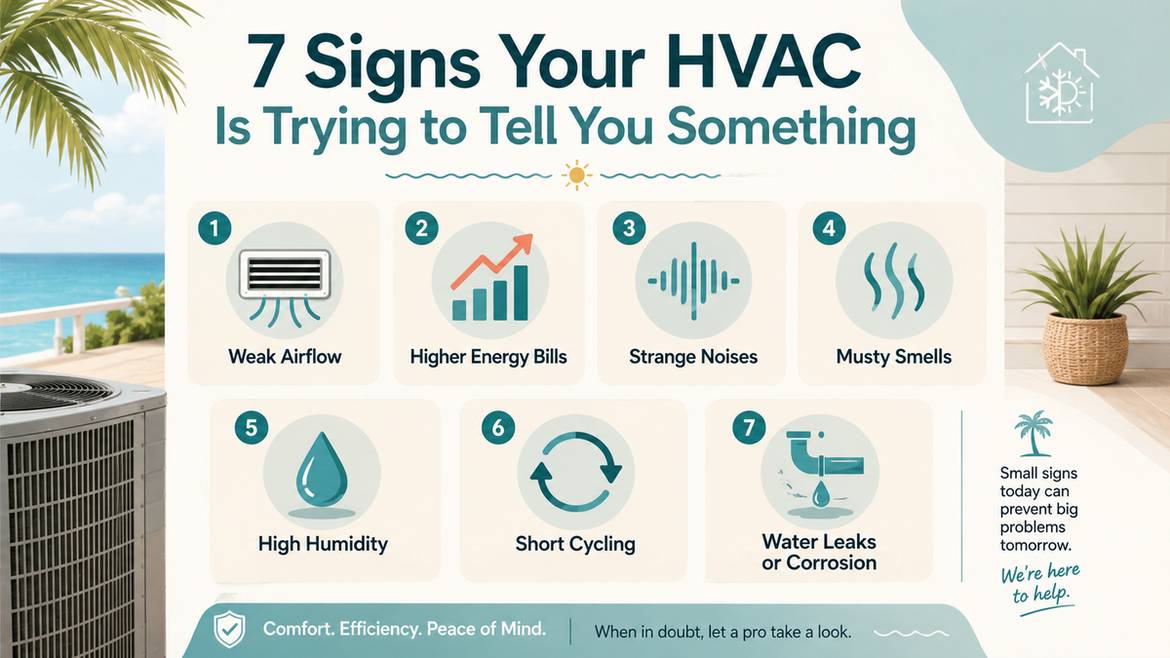
Here are the seven most common things your HVAC system does when something is wrong, what each one usually means, and when it is time to pick up the phone.
1. Weak or Uneven Airflow From the Vents
If you stand under a supply vent and can barely feel air moving, that is a red flag. The same is true if one room feels comfortable and the next feels 5 degrees warmer. Weak airflow rarely fixes itself, and in a humid coastal climate it almost always gets worse before it gets better.
What is usually behind it:
- A clogged filter that has not been changed in 60 days or more
- A failing blower motor or worn-out blower wheel
- Significant duct leakage in the attic, which is brutally common in Galveston-area homes
- A frozen evaporator coil restricting airflow at the air handler
- Closed or blocked return vents starving the system of air to circulate
Try the easy fix first: pull the filter and look at it against the light. If you cannot see through it, replace it and run the system for a couple of hours. If the airflow does not improve, or you notice some rooms still cooling much better than others, that points to a duct or blower issue that needs a technician.
Uneven cooling between rooms is one of the most underrated warning signs because most homeowners assume it is just “how the house is.” It usually is not. It is usually duct leakage, an undersized return, or a system that is struggling to keep up.
2. Higher Electric Bills Without a Change in Use
Pull up your last three summer electric bills and compare them to the same months last year. If your usage habits have not changed but your bill has crept up by 15 to 30 percent, your HVAC is working harder than it should to deliver the same comfort.
Common culprits include:
- Low refrigerant charge from a slow leak, often from corroded coils
- A dirty outdoor condenser coil that cannot reject heat efficiently
- A failing capacitor that makes the compressor work harder on startup
- An aging system that has dropped well below its original SEER rating
- Duct leakage dumping cooled air into your attic instead of your bedrooms
Energy Star qualified units typically save the average household around $140 a year compared with standard models, and in Galveston the savings tend to run higher because the cooling season is so long. If your bills keep climbing on a system over 10 years old, the math often tips toward replacement rather than another repair.
A clean rule of thumb worth remembering: multiply the system’s age in years by the cost of the proposed repair. If that number is over $5,000, replacement is usually the smarter move.
3. Strange Noises Coming From the Indoor or Outdoor Unit
A healthy HVAC system makes a steady, low whoosh. Anything else, banging, screeching, grinding, rattling, clicking, hissing, is the system telling you a part is loose, worn, or about to fail.
Here is a rough translation guide:
- Banging or clanking usually means a loose or broken part inside the compressor or blower
- Screeching or squealing often points to a failing motor bearing or a worn belt
- Grinding typically signals motor bearings on their last legs
- Hissing can mean a refrigerant leak, which is both an efficiency problem and an environmental one
- Clicking at startup that does not stop usually means a failing relay or capacitor
- Rattling outside is often debris in the condenser, but it can also be a fan blade out of balance
The key word is “new.” A new noise that was not there last season is your system asking for attention. Catching a bad capacitor early is a $150 to $250 job. Letting it take out the compressor turns it into a $1,500 to $3,000 job.
4. Musty, Sour, or Burning Smells From the Vents
This one is especially common on the Gulf Coast because of how much moisture our systems handle. The smell that comes out of your vents tells you a surprising amount about what is happening inside the equipment.
- Musty or “wet basement” smell almost always means mold or mildew, either in the ductwork, around the evaporator coil, or in a clogged condensate drain pan. In a humid climate this is not just a comfort issue, it is an indoor air quality issue.
- Burning, rubber, or electrical smell points to overheating wiring, a slipping belt, or a motor running too hot. Shut the system off at the thermostat and call for service the same day.
- Rotten egg smell near a gas furnace can indicate a gas leak. That is a leave-the-house-and-call situation.
- Sweet, chemical smell can indicate a refrigerant leak, which needs a licensed technician.
If you have noticed a persistent musty odor and your home also feels clammy, you almost certainly have a humidity problem on top of a possible coil or duct issue. Both deserve a same-week diagnostic.
5. The House Feels Humid Even When the Thermostat Says 74
In a properly working coastal HVAC system, you should be able to keep indoor relative humidity around 45 to 55 percent. When it creeps above 60 percent, your skin notices before the thermostat does. Surfaces feel sticky. Bedding feels heavy. Wood floors and trim start to swell.
High indoor humidity in a Galveston home usually points to one of three things:
- The system is oversized. It cools the air to setpoint quickly, then shuts off before it has had time to pull moisture out. Common in homes that had a “bigger is better” install years ago.
- The system is undersized or failing. It runs constantly but cannot keep up with the latent load on humid days.
- Coil and airflow problems are reducing the system’s ability to remove moisture, even when it is removing heat.
A cheap indoor hygrometer (under $15) is one of the most useful tools a coastal homeowner can buy. If yours sits above 60 percent for days at a time during cooling season, get a technician to evaluate sizing, duct integrity, and whether a whole-home dehumidifier belongs in your setup. Persistent humidity is also how mold starts, and once mold is in the ductwork, the cleanup is far more expensive than the prevention.
6. Short Cycling: The System Turns On and Off Constantly
Short cycling is when your AC kicks on, runs for a couple of minutes, shuts off, then starts again a few minutes later. It is one of the most damaging things a system can do because each compressor start draws a heavy surge of power and adds wear that long, steady runs do not.
Causes include:
- A refrigerant charge that is too low or too high
- An oversized system fighting its own cooling cycle
- A thermostat in a bad location (in direct sun, near a vent, or near a lamp)
- A clogged air filter or frozen coil triggering safety shutoffs
- A failing low-voltage control board or thermostat
Beyond the wear-and-tear cost, short cycling crushes humidity control. The system never runs long enough to do the dehumidification work your home needs, so even if the temperature reads right, the air still feels wrong. If you can hear your outdoor unit kicking on and off multiple times an hour on a typical summer day, that is not “the system being efficient,” that is the system in distress.
7. Water Leaks, Ice, or Visible Corrosion Around the Equipment
Walk to your indoor air handler and your outdoor condenser once a month during cooling season and look. You do not need to touch anything, just look.
Warning signs to watch for:
- Standing water or fresh stains around the indoor unit usually mean a clogged condensate drain. In a humid climate these clog regularly, often with algae. Left alone, the pan overflows and damages flooring, ceilings, or drywall.
- Ice on refrigerant lines or on the outdoor unit is never normal. It points to low refrigerant or airflow problems. Continuing to run the system when iced over can destroy the compressor.
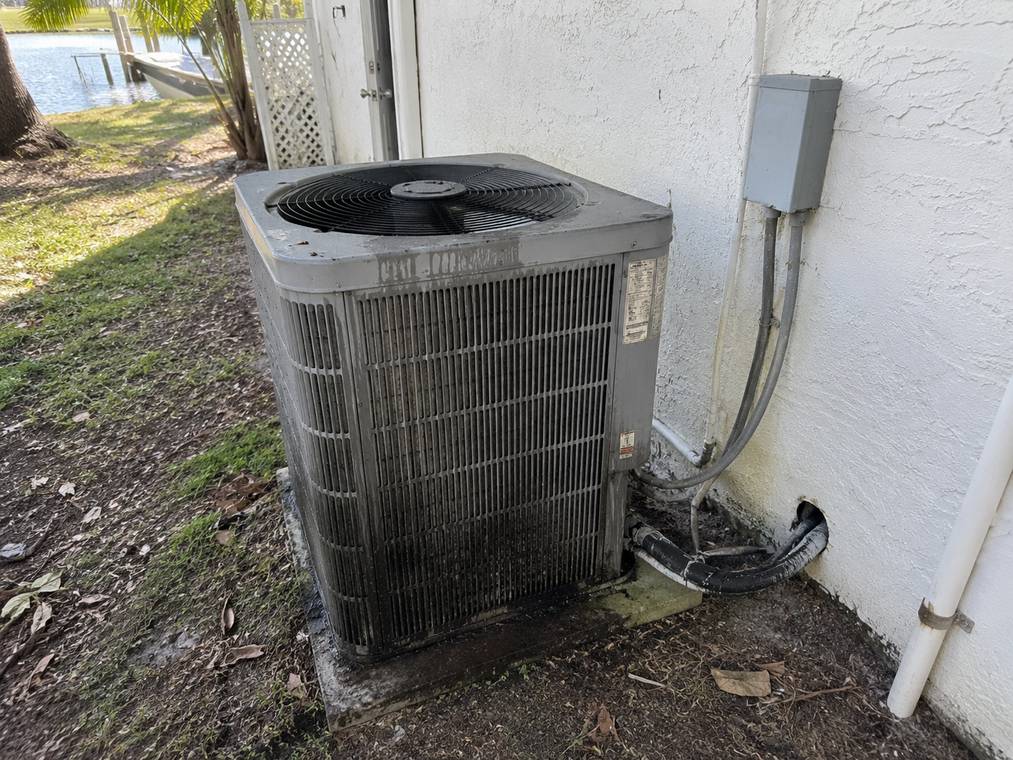
- Rust streaks, bubbled paint, or “bald” patches on the condenser fins are the fingerprint of salt-air corrosion. On Galveston Island, condensers within a couple of miles of the Gulf often show heavy corrosion years before their inland counterparts.
- Tilted or shifted outdoor unit after a storm means the pad has moved or floodwater has lifted the equipment. Flood-exposed units should be inspected before they are turned back on.
For coastal homes, the most effective DIY maintenance is the simplest: rinse the outdoor unit with a garden hose every two to four weeks during the salt-heavy months. Salt does its damage only when it sits on metal surfaces. A gentle rinse from top down, never a pressure washer, can extend the life of a coastal condenser by years. For a deeper walkthrough of what salt air does to specific components and how to slow it down, see our Galveston salt air corrosion guide for HVAC.
When to Call for Service Right Away
Some of these signs can wait a few days. Some cannot. Call for service the same day if you notice any of the following:
- A burning or electrical smell from the vents or equipment
- The circuit breaker for the AC or air handler keeps tripping
- Visible ice on the lines or evaporator coil
- Water dripping or pooling near the air handler
- A loud new noise from the compressor or blower
- The system has been flood-exposed or damaged in a storm
- Indoor air feels significantly worse for someone with asthma or allergies
For everything else, getting a diagnostic within the week usually keeps a $300 fix from turning into a $3,000 repair. Coastal Comfort runs 24/7 emergency dispatch across Galveston County for the situations that cannot wait. You can find more about that on our 24/7 emergency HVAC page.
A Quick Word on Age: When Repair Stops Making Sense
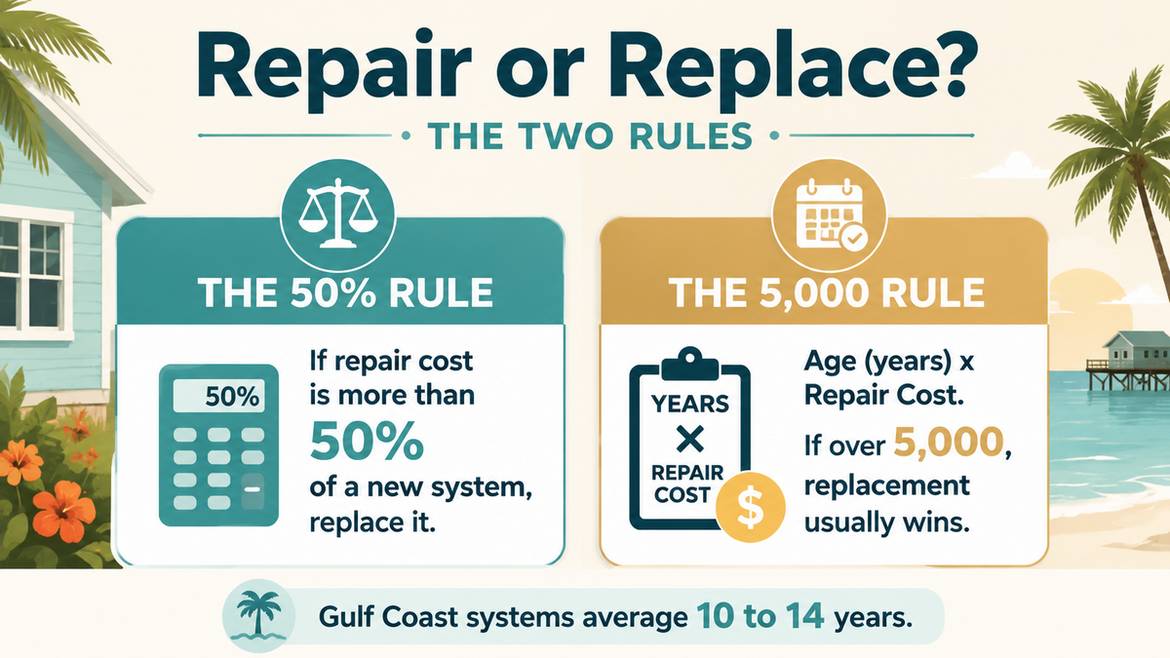
If your system is under 8 years old, almost every repair is worth doing. Between 8 and 12 years, run the math: repair cost over 50 percent of a new install usually means it is time to replace. Past 12 years on the Gulf Coast, you are already past the average lifespan for a coastal system, and continuing to patch is often throwing money at equipment that will fail again within a year or two.
Modern SEER2 16 to 18 systems with variable-speed compressors do a much better job with coastal humidity than the single-stage equipment most older homes still run. The energy savings alone, on a long Galveston cooling season, often offset a meaningful chunk of the upgrade. For a deeper look at how long systems actually last here and what to expect from your own, see our piece on understanding the lifespan of your HVAC system.
Stay Ahead of the Problem With Routine Maintenance
The cleanest way to never have to read an article like this in a panic is twice-yearly maintenance. A spring tune-up before the cooling season and a fall check before any heating use catches most of the seven signs above before you ever notice them. Coil cleaning, drain clearing, refrigerant check, electrical inspection, blower amp draw, all on a schedule.
Coastal Comfort offers maintenance services built specifically for the Gulf Coast climate, with priority service when something does go wrong. You can read more on our HVAC maintenance and check-ups page, and the full seasonal checklist lives on our HVAC maintenance checklist blog.
The Bottom Line
Your HVAC system is not subtle when something is wrong, it just speaks a language most homeowners are not used to listening for. Weak airflow, climbing bills, new noises, musty smells, sticky humidity, short cycling, and visible water or corrosion are the seven signals worth paying attention to. Catch them early and most are inexpensive fixes. Ignore them and the same problems often turn into peak-summer breakdowns.
If you noticed any of these signs while reading, the next step is a diagnostic, not a guess. Coastal Comfort runs same-day service across Galveston County, with technicians who know what salt air and Gulf humidity do to equipment because they live with it too. You can reach us at (409) 202-2188 or through our contact page. We will take a look, tell you what we find in plain English, and put the quote in writing.
Frequently Asked Questions
How do I know if my HVAC needs repair or replacement?
Use two simple rules. First, if the repair cost is more than 50 percent of a new system, lean toward replacement. Second, multiply the system’s age in years by the repair quote. If that number is over $5,000, replacement is usually the better long-term decision. On the Gulf Coast, anything past 12 years old facing a major repair almost always tips toward replacement because the equipment is already past its average lifespan.
Why is my house humid even when the AC is running?
Three usual suspects. The system may be oversized, cooling the air too quickly to remove moisture. It may be undersized or losing capacity and cannot keep up. Or coil and airflow issues are limiting how much moisture the system can pull out. If indoor humidity sits above 60 percent for days at a time, a technician should evaluate sizing, ducts, and whether a whole-home dehumidifier makes sense.
What is the average lifespan of an HVAC system in Galveston?
Roughly 10 to 14 years for a well-maintained coastal system, compared to 15 to 20 years for inland systems. Salt air corrosion, long cooling seasons, and high humidity all push lifespan toward the lower end. Homes within a couple of miles of the Gulf tend to see the shortest lifespans unless the outdoor unit is rinsed regularly and maintained twice a year.
Are strange noises from the AC always serious?
A new noise is always worth checking. Some, like a click at startup that goes away, are not urgent. Others, like grinding or screeching, often signal a failing motor that can take out other parts if ignored. Banging from the outdoor unit usually means something is loose inside the compressor and warrants service before the next start.
What does a musty smell from the vents mean?
Most often it means mold or mildew somewhere in the ductwork, around the evaporator coil, or in a clogged condensate drain. In a humid coastal climate this is common and should be addressed quickly. It is both a comfort issue and an indoor air quality issue, and ignoring it usually lets the problem spread further into the duct system.
How often should I change my air filter on the Texas coast?
Every 30 to 60 days during the cooling season, which runs roughly April through October here. Humid coastal air loads filters faster, and a clogged filter is one of the top causes of weak airflow, frozen coils, and short cycling. Check it monthly and replace it when it looks gray or you cannot see light through it.